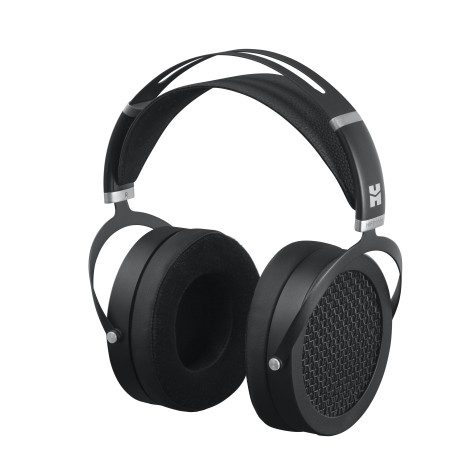
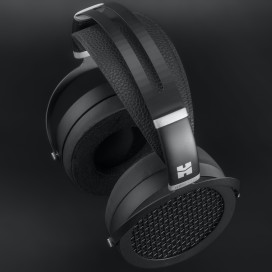
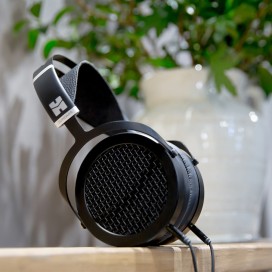
A really good entry level model to the Hifiman lineup that doesn't break the bank: Sundara. Strongly recommended because of its balanced tonality, there is nothing to nitpick from bass to treble. If you are looking for an allrounder that punches way above its weight, look no further.
Open-back planar magnetic over-ear with outstanding value
Since plenty of hi-fi shops already told the world what Sundara means in Sanskrit, let’s focus on what matters here: the headphone itself.
Sundara’s upper mids and treble are exceptionally refined, and—more than models like the HE-560—bring to mind qualities associated with HiFiMAN’s flagship Susvara. The low end is a touch fuller than the very controlled 400i. Overall, Sundara’s timbre is polished, complete, balanced, and engaging across genres.
Power demands are similar to the HE-400i: it will play from many headphone outputs, but to really shine it benefits from dedicated amplification capable of roughly 0.6–1 W into 32 Ω.
What the press says
“The HiFiMan Sundara is an excellent set of headphones. At a lower price point than more well-known high-end options, it’s punching way, way above its proverbial weight class.”
“The Sundara is a fabulous-sounding headphone for the money. The bass goes deep with lots of texture and a well-tempered presence. The mid-range is delicious and balanced, the treble is clean and fast. Also, it is a very unfatiguing listening experience, allowing for cranking up the volume. From moderate sources it sounds quite good, but with a powerful amplifier it offers stunning performance.”
“At this price point, one can find headphones that are different from the Sundara, but one would be hard-pressed to find one that’s inarguably better. I have no problem wholeheartedly recommending the Hifiman Sundara to anyone who’s in the market for a smooth, laid-back, inviting headphone… The Sundara does lovely things for a headphone of its price, and I think it’s something any audiophile should check out.”
Frequency response (example measurement)
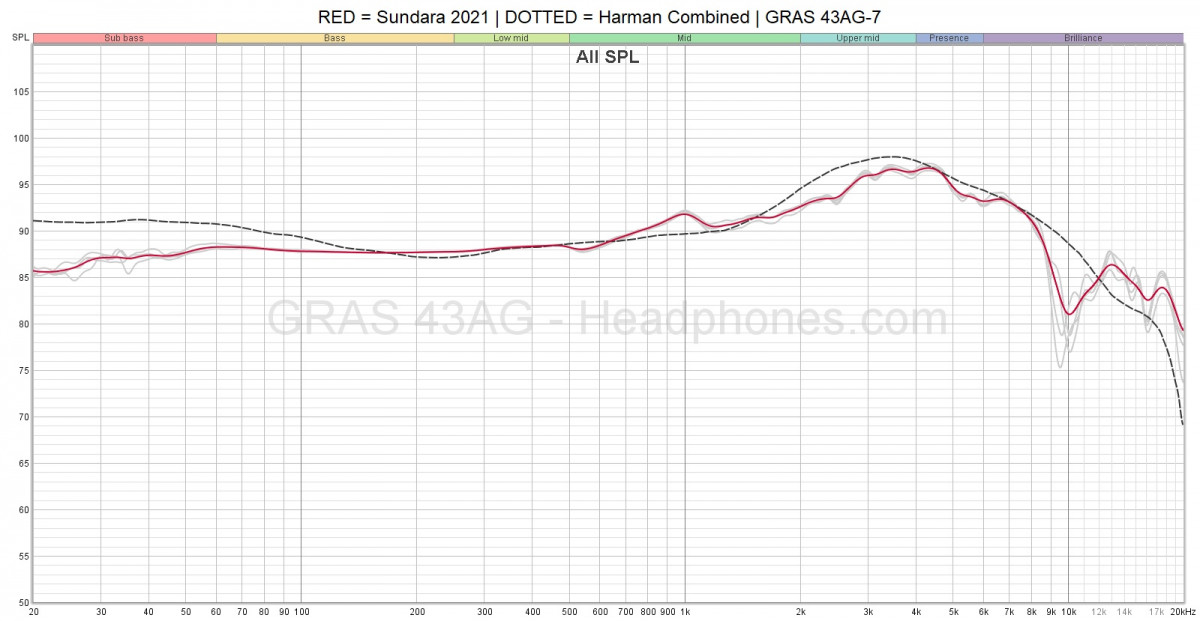
The black line is something you could call the “ideal” curve: a target response derived from research by the Harman group, exploring what kind of headphone tuning tends to be preferred by a broad range of listeners—regardless of age or demographics. This is often referred to as the Harman Target.
From left to right you see sub-bass, bass, mids, and then the curve tilts upward where treble begins. That part of the spectrum is naturally amplified by the shape of the human ear.
With open-back designs you often get a slight dip in the bass region. To balance that, you may also see a more relaxed treble—resulting in a very even, reference-leaning tuning for the price. Similarly tuned headphones often mentioned in this context include the Sennheiser HD650 and HD660.
Harman Research: The Perception and Measurement of Headphone Sound Quality – What Do Listeners Prefer?
| Frequency response | 6 Hz – 75 kHz |
| Impedance | 32 Ω |
| Sensitivity | 92 dB/W/m |
| Weight | 342 g |