- -€201.00
- New


At a glance
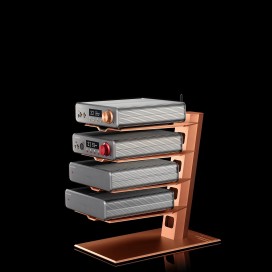
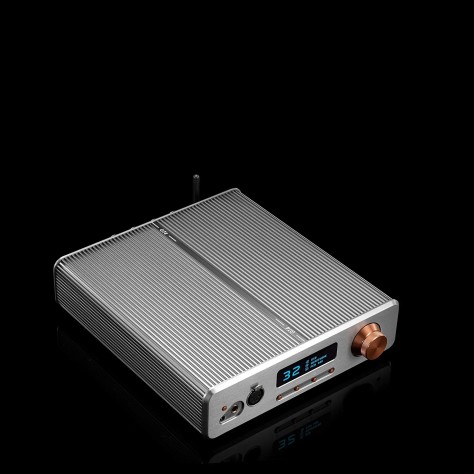
Burson Conductor GT4: DAC with one converter chip per channel, Class A headphone amplifier and preamp with analogue and digital inputs, Bluetooth and a subwoofer output, available as Deluxe or as Max with the Fusion Core power supply.
At a glance
DAC, Class A headphone amplifier and preamp with one converter chip per channel
The Conductor GT4 combines a DAC, headphone amplifier and preamp and sits between the compact Conductor Stellar and the large Conductor Voyager in Burson’s range. According to Burson, the amplifier section comes from the Soloist, with 10 W into 32 Ω via XLR. The DAC uses two ESS chips, one per channel and each with its own power supply.
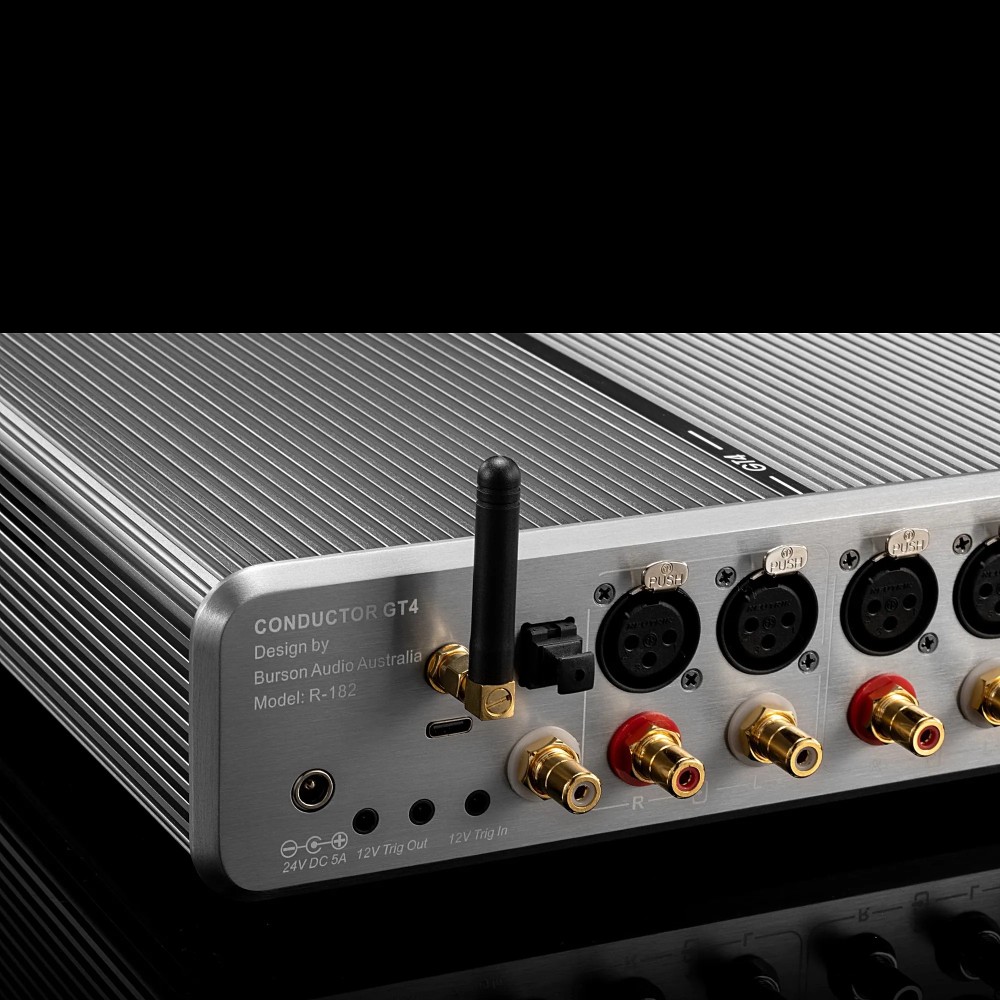
It accepts digital and analogue sources: USB-C with an XMOS receiver (PCM up to 768 kHz/32 bit, native DSD512), coaxial and optical, Bluetooth 5.0 with aptX HD and LDAC, plus two XLR and two RCA inputs. Via XLR and RCA it works as a variable preamp or a fixed line output, along with a subwoofer output and a microphone input on the front. Burson lists the unit as Roon Tested.
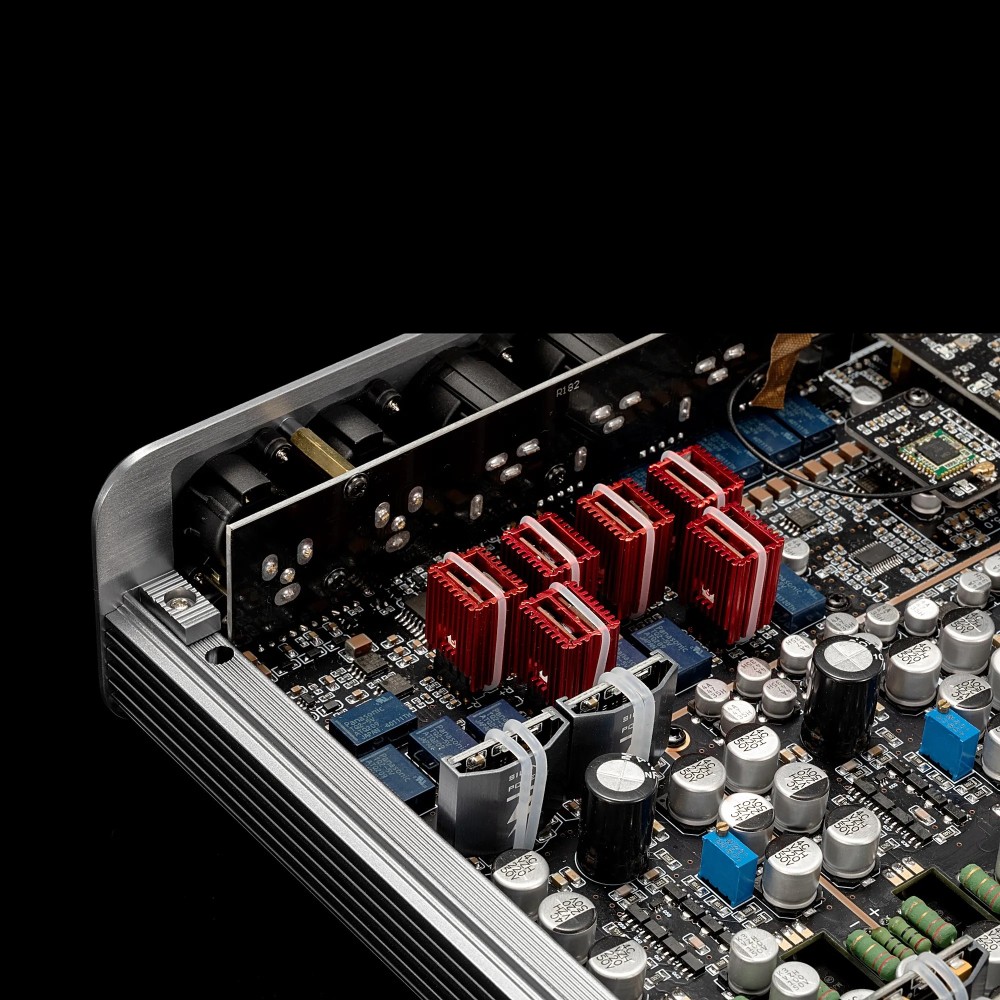
Good to know: The unit runs warm, so place it in the open. It has no dedicated IEM stage, and Soundnews heard noise with very sensitive IEMs. According to Passion for Sound, analogue inputs are resampled for volume control, so a purely analogue path is not retained.
Gold Award and 94 out of 100 points. The review reports a wide stage, a meaty midrange and restrained treble. The Fusion Core is a big step up here. It criticises the noise with very sensitive IEMs and the heat.
After 500 to 600 hours of use, the Conductor GT4 is the reviewer’s current reference. He describes the sound as linear with no tonal colouration and praises the high-end build and the headphones plus subwoofer mode.
Editors’ Choice 2025 among DAC/amps for headphones. The review describes the sound as neutral and precise with plenty of dynamics, and names the warm chassis and the plain looks as weaknesses.
For anyone looking for a DAC and a powerful headphone amplifier in one unit who also wants to connect analogue sources. If you mainly use very sensitive IEMs, the Conductor Stellar with its dedicated IEM stage is the better choice.
| Amplifier | |
| Design | Class A, discrete, balanced |
| Headphone outputs | 4-pin XLR (balanced), 6.3 mm |
| Power into 32 Ω (XLR / 6.3 mm) | 10 W / 5 W |
| Power into 100 Ω (XLR / 6.3 mm) | 5 W / 2.5 W |
| Power into 150 Ω (XLR / 6.3 mm) | 3 W / 1.5 W |
| Power into 300 Ω (XLR / 6.3 mm) | 2 W / 1 W |
| Gain settings | 2 |
| Headphone output impedance | 0.5 Ω |
| Preamp output impedance | 1 Ω / 25 Ω |
| Input impedance | 40 kΩ |
| Distortion (THD) | < 0.0015 % |
| Frequency response | 0–58 kHz (±1 dB) |
| Converter | |
| D/A converter | 2× ESS ES9038Q2M |
| USB | USB-C (XMOS), PCM up to 768 kHz/32 bit, native DSD512 |
| Coaxial and optical | up to 192 kHz/24 bit |
| Bluetooth | Bluetooth 5.0 (Qualcomm CSR8675), LDAC, aptX HD, AAC, up to 96 kHz/24 bit |
| Connections | |
| Inputs | 2× XLR, 2× RCA, USB-C, coaxial, optical, Bluetooth, microphone (front) |
| Outputs | 1× XLR and 1× RCA, variable (preamp) or fixed (line), 1× subwoofer |
| General | |
| Dimensions | 255 × 270 × 70 mm |
| Weight | approx. 5 kg |
| Mains voltage | 100–240 V |
| Power figures | Manufacturer data, high gain |