
Filter By



High-End Headphone Amplifiers
A high-end headphone amplifier delivers excellent control, low distortion, and a clean, low-noise signal—even when driving demanding loads. Our range extends from compact desktop solutions and integrated DAC/headphone amplifier combinations to specialised amplifiers for ribbon and electrostatic headphones, as well as uncompromising reference-grade components.
From our recommendations: the JDS Labs Element IV, a DAC and amplifier in one, the Violectric HPA V324 and the Zähl HM1. We are happy to discuss on WhatsApp which amplifier suits your headphones.
-

![]()
- New
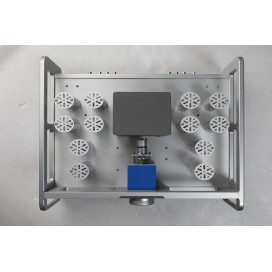
On orderAllnic HPA-10000 XL
€16,400.00Allnic Audio HPA-10000 XL – High-end Class A tube headphone amplifier and line stage with true OTL/OCL architecture, 10 W output power and support for headphones from 15 to 600 Ω.
-
![]()
- New
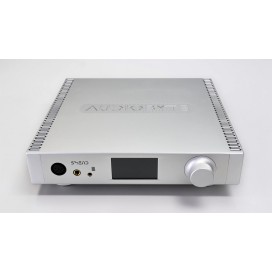
On orderAudiobyte SuperHEAD
€3,990.00Audiobyte’s first dedicated headphone amplifier, also a line preamplifier. 17 V RMS into 100 ohms, up to 5 W into 16–50 ohms, signal-to-noise above 125 dB, gain adjustable from 0 to 20 dB in 0.5 dB steps. Balanced outputs on 4-pin XLR and 4.4 mm, plus 6.3 mm; XLR and RCA in and out. Internal linear power supply, touchscreen, 5.5 kg.
-
![]() On order
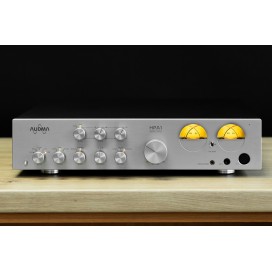
On orderAudma Maestro
€9,500.00The AUDMA Maestro HPA1 combines an exceptionally powerful headphone amplifier, a high-end DAC and a fully featured analog preamplifier into one uncompromising reference component. Its unique ELISA technology recreates a natural, speaker-like soundstage, delivering an immersive listening experience unlike conventional headphone amplifiers. Designed and handcrafted in Italy, the Maestro features a true dual-mono architecture, outstanding power reserves and impeccable build quality.
-
![]() On order
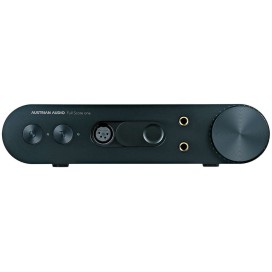
On orderAustrian Audio Full Score One
€1,499.00Austrian Audio Full Score One: High-end headphone amplifier with True Transient Technology, extremely low THD, and power for 10–600 Ω headphones.
-
![]() -€187.00 Off
-€187.00 Off
- -€187.00
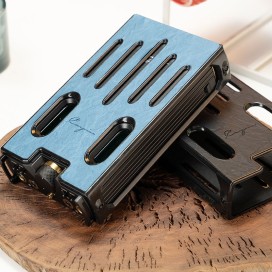
In StockCayin C9 II with protective case
For the highest demands on mobile audio - the Cayin C9 II, a tube amplifier for your jacket pocket, with Nutube tubes and customizable sound characteristics.
-
![]() -€48.00 Off
-€48.00 Off
- -€48.00
On orderCayin iHA-8
Small but mighty: Cayin Audio presents its new, tiny but mighty Class A headphone amplifier that packs a punch. With the iHA-8, the tube genius returns to the transistor world and delivers almost 20 watts of Class A power in a compact desktop format.
-
![]() -€20.00 Off
-€20.00 Off
- -€20.00
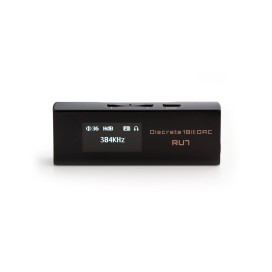
On orderCayin RU7 Dongle DAC
The Cayin RU7 is a USB DAC and headphone amplifier in one - built to provide a powerful alternative to the usually weak headphone outputs of mobile devices, but good enough to stand up to stationary setups as well.
-
![]() -€48.00 Off
-€48.00 Off
- -€48.00
-
![]() In Stock
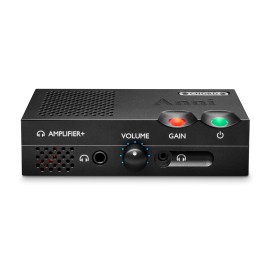
In StockChord Anni
€1,649.00Anni is a desktop integrated amplifier that introduces Chords next-generation ULTIMA technology to both headphones and compact loudspeakers.
-
![]() In Stock
In StockChord Hugo 2
€2,690.00Developed by Rob Watts as the ultimate "portable" headphone amplifier, it is of a quality that can easily compete with most stationary units: Hugo 2.
-
![]() On order
On orderChord Mojo 2 (4.4 mm)
€549.00A compact, portable powerhouse of an amplifier - now at a greatly reduced price.
-
![]() On order
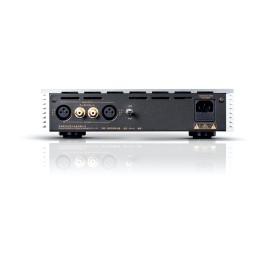
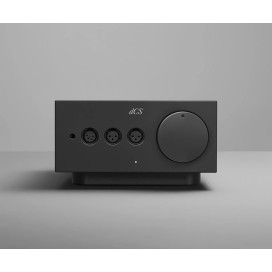
On orderdCS Lina Headphone Amp
€10,000.00Discover your headphones anew: dCS Lina Headphone Amplifier delivers neutral high-end sound, power, and finesse – perfect for any listening setup.
-
![]() On order
On orderErzetich Bacillus II
€799.00Compact headphone amplifier with warm, dynamic sound and striking design: Bacillus II reveals fine details and drives any headphone with ease.
-
![]() On order
On orderErzetich Bacillus II+
€1,999.00Bacillus II+ features a triple-reinforced power supply, true dual-mono design and fully balanced architecture for clear, dynamic, precise sound.
-
![]() On order
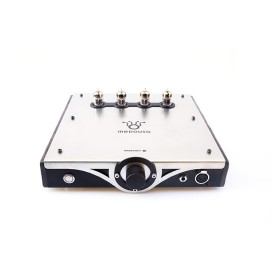
On orderErzetich Medousa
€3,499.00Medousa Class-A headphone amplifier in stainless steel and wood: balanced design with tube gain stage and solid-state buffer for vibrant sound.
-
![]() On order
On orderErzetich Perfidus
€999.00Perfidus Class-A headphone amplifier with flat 4 Hz–40 kHz response, powerful dynamics and exceptional detail for an immersive listening experience.
-
![]() On order
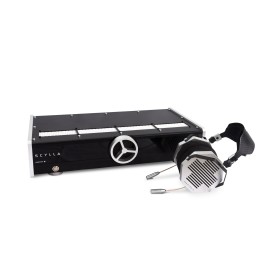
On orderErzetich Scylla
€5,999.00Scylla fully balanced dual-mono Class-A headphone amp with flawless neutrality and an expansive, immersive soundstage.
-
![]() In Stock
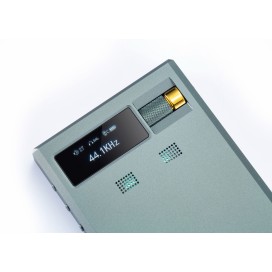
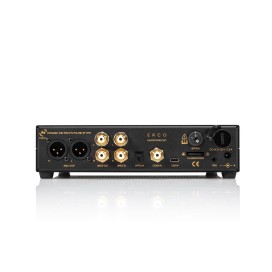
In StockFerrum Erco 2 DAC/Amp
€1,795.00With the full reprogramming of ERCO’s software in combination with crucial changes in the analog circuitry, Ferrum is introducing a newer and better ERCO. The ERCO Gen 2 will bring their entry-level DAC one step closer to the performance levels of WANDLA, their flagship converter.
-
![]() In Stock
In StockFerrum OOR
€1,995.00A powerhouse in a compact chassis — the Ferrum OOR. Specifically designed to meet the demands of the Susvara, it can effortlessly drive virtually any headphone on the market, delivering an exceptionally dynamic and detailed sound.
-
![]() On order
On orderFerrum WANDLA HP
€3,295.00Ferrum's high-end converters paired with a really powerful headphone amplifier - the result is one of the mightiest all-in-one devices on the market.
-
![]()
- New
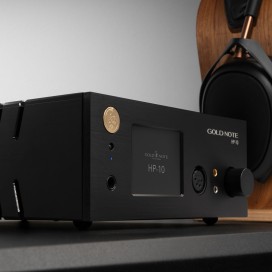
On orderGold Note HP-10
€1,890.00High-end discrete Class-A headphone amplifier with four headphone outputs and optional external PSU-10 EVO power supply, in three finishes. -
![]()
- New
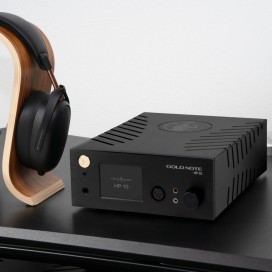
On orderGold Note HP-10 BT
€1,990.00The Gold Note HP-10 with added Bluetooth 5.1 aptX HD – discrete Class-A circuitry, four headphone outputs, wireless and wired. -
![]()
- New
On orderGold Note HP-10 Deluxe
€2,390.00The top version of the Gold Note HP-10 with USB-C input and premium AKM AK4493 DAC – discrete Class-A circuitry, four headphone outputs, Bluetooth HD aptX. -
![]()
- New
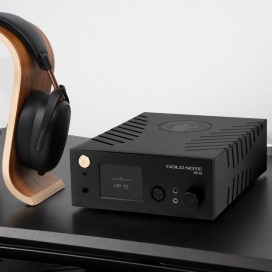
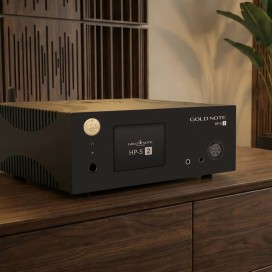
On orderGold Note HP-5.2
€990.00Compact, discrete Class-A headphone amplifier with four headphone outputs, a built-in DAC and precise sound tuning via touchscreen.













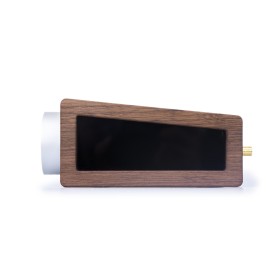

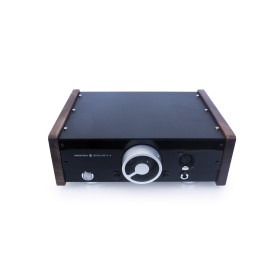


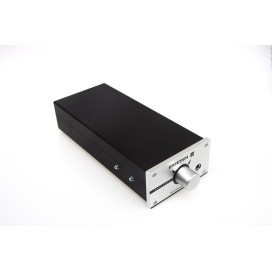








Guide
What Defines a High-End Headphone Amplifier
A high-end headphone amplifier differs from simpler solutions primarily in its technical design. The aim is to amplify the signal as precisely as possible, either without altering the sound or with only subtle and intentional sonic characteristics. Several factors work together to achieve this, including power reserves, output impedance, noise performance, and stability under different load conditions. High-quality headphones are particularly sensitive to these parameters, which is why the choice of amplifier has a direct impact on the overall performance of the system.
The quality of the internal signal processing is equally important. High-quality headphone amplifiers often use discrete circuitry, premium components, and stable power supplies. These design features are not intended to colour the sound, but rather to provide the most transparent signal amplification possible and ensure stable performance even with demanding headphones.
Connectivity and integration into existing systems also play an important role. Many high-end headphone amplifiers offer balanced outputs, multiple gain settings, or different input options. This makes it possible to create both stationary audio systems and compact desktop setups with a high degree of flexibility. In sophisticated systems in particular, this flexibility is an important consideration when choosing an amplifier.
Understanding Power, Voltage, and Current
The power rating of a headphone amplifier alone provides only limited information about its suitability. What matters is how its voltage and current delivery capabilities relate to the headphones being used. Different types of headphones can place significantly different demands on an amplifier.
High-impedance dynamic headphones primarily require sufficient output voltage. Models with an impedance of 250 or 600 ohms may otherwise fail to reach the desired volume or may lose dynamic impact. In these cases, an amplifier with a high output voltage and a well-designed gain structure is advisable.
Planar magnetic headphones have different requirements. They often have a comparatively low impedance but require a high current delivery capability. Amplifiers with substantial power reserves and a stable output stage have an advantage here. Particularly demanding models benefit from sufficient reserves to reproduce dynamic peaks cleanly and accurately.
Highly sensitive headphones and in-ear monitors require less power, but place greater demands on fine resolution and precise volume control. A powerful amplifier without suitable gain settings may result in a very limited usable range on the volume control. Selectable gain settings or particularly precise volume controls are therefore beneficial in these systems.
A high-end headphone amplifier accommodates these different requirements either through a versatile design or through specific optimisation for certain types of headphones. The power rating alone should therefore not determine the choice. The interaction between voltage, current, and gain structure is what ultimately matters. The “Do they match?” section on our comparison page gives an estimate of how well an amplifier suits your headphones.
Output Impedance, Gain, and Noise Performance
In addition to power output, the output impedance of a headphone amplifier plays an important role. A low output impedance ensures that the headphones are driven with proper control and that their frequency response remains as unchanged as possible. This is particularly important for low-impedance or sensitive headphones and contributes to precise reproduction.
The gain structure also affects everyday usability. Multiple gain settings make it possible to operate both sensitive in-ear monitors and power-hungry headphones effectively. This preserves a useful adjustment range on the volume control and makes precise volume setting easier.
Noise performance is especially important when using highly sensitive headphones. High-quality headphone amplifiers are designed to keep internal noise as low as possible, even at higher gain settings. A clean power supply, premium components, and a carefully designed circuit architecture all contribute to a quiet and noise-free listening experience.
These technical parameters should not be considered in isolation. Output impedance, gain structure, and noise performance together determine how flexible a high-end headphone amplifier is in practical use and how well it can be paired with different headphones.
Types and Requirements
High-end headphone amplifiers differ not only in their power output, but also in their fundamental technical design. Each amplifier type has its own characteristics and is suited to different applications depending on the headphones, intended use, and overall system. A well-informed choice should therefore always take the amplifier principle into account.
Several product concepts have become established in the high-end segment, each offering its own advantages:
Solid-State Amplifiers
Solid-state headphone amplifiers are designed for precision, control, and high stability under different loads. They often provide a low output impedance, substantial power reserves, and broad compatibility with different types of headphones. Planar magnetic headphones and demanding dynamic models in particular benefit from this stable drive capability. Solid-state amplifiers are therefore often the first choice when maximum control and versatile use are priorities.
Tube Amplifiers
Tube-based headphone amplifiers can differ considerably depending on their design. OTL designs are often particularly well suited to high-impedance dynamic headphones, while transformer-coupled tube amplifiers offer broader compatibility and may also be capable of driving demanding planar magnetic headphones. Tube amplifiers are often selected as part of a carefully matched system in which the combination of headphones and amplifier plays a central role.
DAC and Headphone Amplifier Combinations
Integrated DAC and amplifier solutions combine a digital-to-analogue converter and headphone amplifier in a single device. This reduces the number of individual components required and simplifies integration into desktop or streaming systems. High-quality models offer multiple digital inputs, balanced outputs, and powerful amplifier sections. For many applications, these devices provide a compact and technically sophisticated solution.
Portable High-End Headphone Amplifiers and Bluetooth Solutions
Portable devices combine high-quality amplifier technology with a compact design. They are often connected via USB or Bluetooth and are suitable for use with portable players, computers, or streaming devices. Despite their compact dimensions, many models offer powerful amplifier sections and support modern Bluetooth codecs.
Buying Guide: What to Consider When Choosing a Headphone Amplifier
A high-end headphone amplifier should not be considered in isolation, but always within the context of the complete system. The amplifier, headphones, and signal source must be technically compatible with one another. Several factors play a role here, and their importance may vary depending on the intended application.
Connections, Balanced Operation, and System Integration
The available connections determine how flexibly a headphone amplifier can be integrated into an existing system. High-quality models often provide both single-ended and balanced outputs, including 6.35 mm jack, 4.4 mm Pentaconn, and XLR connections. Headphone cables with these plugs are available under High-End Headphone Cables. Depending on the internal design of the device, balanced outputs may offer advantages in terms of channel separation and available power.
Different input options are also relevant. These may include analogue RCA or XLR connections, as well as digital inputs in integrated DAC solutions.
Desktop, Stationary, or Portable Use
The intended use is a key selection criterion. Stationary desktop amplifiers often feature larger power supplies, greater power reserves, and a wider range of connections. Portable high-end headphone amplifiers, by contrast, focus on compact dimensions and flexible use with mobile devices or laptops. Some models combine both approaches and can be used in either a stationary or portable setup.
Power Reserves Rather Than Wattage Alone
A power rating on its own provides only limited information. It is more important to determine whether the amplifier can supply sufficient voltage and current for the headphones being used. Planar magnetic headphones often benefit from generous power and current reserves, while high-impedance dynamic headphones primarily require sufficient voltage.
A well-designed high-end headphone amplifier provides adequate reserves without compromising control or noise performance.
Operation, Build Quality, and Long-Term System Compatibility
In addition to technical specifications, practical considerations also play an important role. A finely adjustable volume control, multiple gain settings, and a well-designed operating concept can make everyday use considerably easier.
Build quality, enclosure design, and long-term compatibility with an expanding system are also relevant. High-end headphone amplifiers are often used for many years and paired with a variety of different headphones.
These criteria help you select an audiophile headphone amplifier that is specifically suited to your individual requirements. If you are unsure, we are happy to advise you personally, by appointment also in our listening room in Bari.
FAQ: Frequently Asked Questions About Headphone Amplifiers
When Is a High-End Headphone Amplifier Worthwhile?
A high-end headphone amplifier is worthwhile when the headphones place high demands on power, voltage, or current delivery, or when a particularly quiet and controlled signal is required. Planar magnetic headphones, high-impedance dynamic models, and highly sensitive in-ear monitors can all benefit from a suitably matched amplifier.
Is a DAC with an Integrated Headphone Amplifier Sufficient?
That depends on the headphones and the intended application. High-quality DAC and amplifier combinations can provide sufficient power for many headphones. For particularly demanding models or more complex systems, a dedicated high-end headphone amplifier may offer additional power reserves and greater flexibility.
What Does Low Output Impedance Mean in a Headphone Amplifier?
A low output impedance provides stable control over the headphones and helps prevent changes to their frequency response. It is particularly important for low-impedance headphones and in-ear monitors, where it contributes to precise and accurate reproduction.
Are Balanced Outputs Always Better?
Balanced outputs are not automatically better, but they can offer advantages when the device has been designed accordingly. These advantages may include greater power reserves, improved channel separation, and reduced susceptibility to interference. However, both the amplifier and the headphones must support balanced operation.
How Much Power Should a High-End Headphone Amplifier Provide?
The required power depends on the headphones. High-impedance dynamic headphones usually require more voltage, while planar magnetic models often require more current and greater power reserves. A general wattage figure therefore provides little useful information on its own. The combination of power, voltage, and current delivery is what matters.
What Is the Difference Between a Tube Amplifier and a Solid-State Amplifier?
Solid-state amplifiers often provide a high level of control, low output impedance, and broad compatibility with different headphones. Tube amplifiers vary depending on their design and are often selected specifically for use with particular headphones. Both amplifier concepts have different technical characteristics and are suited to different applications. Tube headphone amplifiers are collected in our Tube Amplifiers category.