
Filter By


Tube Headphone Amplifiers
A high-quality tube headphone amplifier can reproduce music with exceptional spaciousness, body and naturalness: depending on the circuit, warm and smooth or open, dynamic and precise. At Level Audio you will find selected OTL, all-tube and hybrid amplifiers that can be matched to your headphone type, listening habits and sonic preferences.
High-impedance dynamic headphones rated at 250 to 300 ohms, such as the Sennheiser HD 800 S or models from the HD 600 family, pair particularly well with OTL tube amplifiers like the Feliks Audio Elise Mk II, the Euforia EVO or the Echo Vibe. To check whether an amplifier has enough power for your headphones, add both to the comparison using “Compare” (⇄): the “Do they match?” section on the comparison page then rates the pairing based on impedance, sensitivity and amplifier power.
From our recommendations: the Echo Vibe as an entry point and the Cayin HA-3A, whose output transformers and three impedance settings from 8 to 600 ohms let it drive low-impedance headphones as well.
-

![]()
- New
On orderAllnic HPA-10000 XL
€16,400.00Allnic Audio HPA-10000 XL – High-end Class A tube headphone amplifier and line stage with true OTL/OCL architecture, 10 W output power and support for headphones from 15 to 600 Ω.
-
![]()
- New
On orderAllnic HPA-15000 OTL/OCL
€19,800.00Allnic Audio HPA-15000 OTL/OCL – High-end pure Class A tube headphone amplifier with true OTL/OCL architecture, up to 10 W of output power and support for headphones from 15 to 600 Ω.
-
![]()
- New
On orderAllnic HPA-300B
€15,400.00Allnic Audio HPA-300B – High-end Class A 300B tube amplifier for headphones and speakers with 8 W output, tube rectification and exceptionally versatile connectivity.
-
![]() -€98.00 Off
-€98.00 Off
- -€98.00
- New
On orderCayin HA-1A MK3
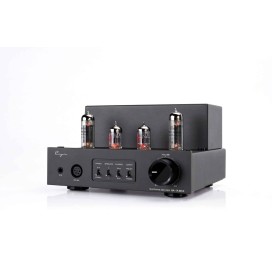
Cayin HA-1A MK3 – compact single-ended Class A tube headphone amplifier with EL84 output tubes, 4-pin XLR output, switchable impedance matching and preamp output. 2.8 W balanced.
-
![]() -€199.00 Off
-€199.00 Off
- -€199.00
On orderCayin HA-2A
The new HA-2A from Cayin sets new standards in audio performance as a balanced tube headphone amplifier with selected NOS tubes.
-
![]() -€280.00 Off
-€280.00 Off
- -€280.00
- New
On orderCayin HA-300 MK3
Cayin HA-300 MK3 – High-end 300B Single-Ended Class A tube amplifier for headphones and speakers with separate power supply, DUELUND capacitors and up to 6.5 W output.
-
On order
Cayin HA-3A
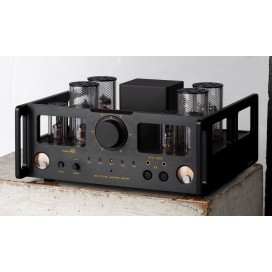
The Cayin HA-3A is a feast for the eyes and ears: visually, the headphone amplifier scores points with its glowing tubes, shiny housing and attractive aluminum front, while the analog flair is underlined by the pointer-armored VU meters. Acoustically, excellent transformers and transformers as well as the puristic two-stage amplifier circuit in Class A operation and single-ended design ensure extremely clear, clean, dynamic and powerful amplification with ample reserves.
-
![]() -€599.00 Off
-€599.00 Off
- -€599.00
- New
On orderCayin HA-6A Mk2 KT88
Cayin HA-6A MK2 – High-end Class A tube headphone amplifier with KT88 tubes, Triode/Ultra-Linear modes, separate power supply and up to 4.5 W output.
-
![]() -€298.00 Off
-€298.00 Off
- -€298.00
- New
On orderCayin Soul 170HA
Cayin Soul 170HA – single-ended Class A tube amplifier with Tung-Sol KT170 for headphones and speakers. Up to 18 W per channel, triode/ultralinear mode, separate tube-rectified power supply, remote control.
-
![]()
- New
On orderFeliks Audio Bliss
€19,000.00Feliks Audio Bliss – fully balanced Class A tube amplifier with four 300B for electrostatic headphones: adjustable Pro and Normal bias, up to 520 V RMS.
-
![]() On order
On orderFeliks Audio Echo Classic
€699.00Feliks Audio Echo Classic – handcrafted tube headphone amplifier from Poland. Warm, natural sound, 350 mW output, ideal for 80–600 Ω headphones.
-
In Stock
Feliks Audio Echo Vibe
€899.00Feliks Audio Echo Vibe – handcrafted tube amplifier from Poland with warm, detailed sound, 350 mW power, 20 dB gain and modern wood-accented design.
-
![]() In Stock
In StockFeliks Audio Elise Mk II
€1,799.00Whether you’re trying to tame slightly bright headphones without smearing over the resolution of your source, or you're seeking out something that will add a touch of warmth and vibrancy to your system, the Elise is a highly capable amplifier for a wide range of headphones.
-
![]() In Stock
In StockFeliks Audio Envy
€6,999.00Class A Single-ended transformer coupled, balanced amplifier, powered by the legendary 300B tubes
- Developed to drive even the most demanding headphones with up to 8 Watts of power
- Exclusive finish and extensive customization options
- Multiple inputs and outputs for maximum functionality
- Balanced input / output XLR connections
-
![]() In Stock
In StockFeliks Audio Envy Performance
€7,799.00Class A Single-ended transformer coupled, balanced amplifier, powered by the legendary 300B tubes
- Developed to drive even the most demanding headphones with up to 8 Watts of power
- Exclusive finish and extensive customization options
- Multiple inputs and outputs for maximum functionality
- Balanced input / output XLR connections
-
![]() On order
On orderFeliks Audio Envy Susvara Edition
€12,000.00Feliks Audio Envy Susvara Edition – 9W Class-A 300B tube amplifier with amorphous transformers for the most demanding high-end headphones.
-
![]()
- New
On orderFeliks Audio EOS
€11,000.00Feliks Audio EOS – 300B tube amplifier for headphones and speakers with up to 8 W, a display with tube diagnostics, remote control and preamp outputs.
-
![]() On order
On orderFeliks Audio Euforia EVO
€2,699.00The new Feliks Audio Euforia EVO uses all of the upgraded internals from the 20th Anniversary Euforia from Feliks Audio, and has a stunning new faceplate design with XLR output. Easily drive headphones from 32 to 600 ohms, including planar magnetics.
-
In Stock
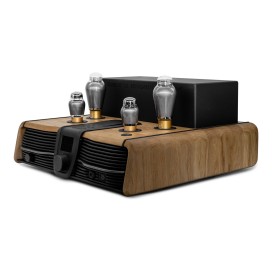
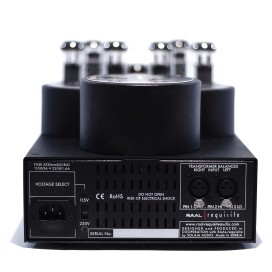
RAAL PDT-1a
€2,300.00An OTL tube amp from RAAL - for convential dynamic and planar driver type headphones.
-
![]()
-
![]() On order
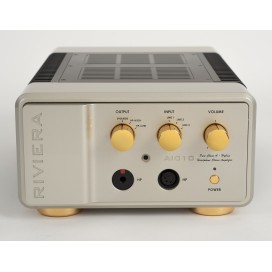
On orderRiviera Audio AIC10-Bal
€21,000.00Hybrid Class A headphone and speaker amplifier from Italy featuring a tube preamp stage, MOSFET output stage and an exceptionally natural, musical sound signature.
-
![]() In Stock
In StockStax SRM-500T
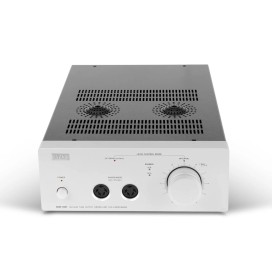
€1,800.00STAX SRM-500T – high-quality hybrid electrostatic amplifier with FET input stage, tube output stage, and natural spacious sound for STAX Earspeakers.
Only suitable for electrostatic headphones with a Pro Bias connector, such as the Stax Earspeakers. Dynamic and planar magnetic headphones cannot be connected.
-
![]() On order
On orderStax SRM-700T
€3,900.00Hybrid electrostatic amplifier from STAX with FET input, 6SN7 tube output stage, fully balanced design and warm, spacious high-end performance.
Only suitable for electrostatic headphones with a Pro Bias connector, such as the Stax Earspeakers. Dynamic and planar magnetic headphones cannot be connected.























Guide
What defines a headphone amplifier with tubes?
A headphone amplifier raises the signal from a source to a level that can drive the connected headphones with control and low distortion. In a tube amplifier, vacuum tubes handle at least part of this amplification.
Tubes work differently from transistors on a technical level. This can lead to differences in distortion behaviour, in the perceived dynamics and in the rendering of timbre. Tube headphone amplifiers are therefore often described with terms such as warm, harmonic, full-bodied or spacious.
Such descriptions can be accurate, but they are not a universal property of every tube amplifier. A carefully engineered tube headphone amplifier can be just as fast, transparent and controlled. Other models deliberately aim for a fuller lower midrange, softer contours or a particularly expansive soundstage.
More important than whether a device uses tubes at all is how they are employed within the circuit. Preamp tubes, power tubes, output transformers, feedback, power supply and output stage shape the result together.
Visually and physically, many tube amplifiers also differ noticeably from compact transistor models. Visible tubes, substantial enclosures and elaborately crafted components make them, for many headphone enthusiasts, not just a playback device but a deliberately chosen part of the hi-fi system.
What types of tube headphone amplifiers are there?
Not every headphone amplifier with tubes follows the same technical principle. The most relevant designs are OTL amplifiers, transformer-coupled all-tube amplifiers and hybrid concepts. The topology determines which headphones can be driven sensibly and which sonic qualities take centre stage.
OTL tube amplifiers without output transformers
OTL stands for "Output Transformerless". In these amplifiers, the output signal is passed to the headphones without an output transformer.
This design can enable a very direct, open and flowing presentation. OTL amplifiers are often associated with a generous sense of space, natural voices and a particularly harmonious midrange. They are therefore very popular with owners of high-quality dynamic headphones.
Electrically, OTL amplifiers usually suit medium- and high-impedance headphones best. Models rated at 250, 300 or 600 ohms can benefit from the high voltage capability of such an amplifier.
For very low-impedance headphones or demanding planar magnetic models, however, OTL amplifiers are not necessarily the best choice. Depending on the design, output impedance and current delivery can affect bass control, frequency response or the maximum available volume.
The impedance ranges specified by the manufacturer and the specific technical data of the model in question therefore always remain decisive.
Transformer-coupled tube headphone amplifiers
In a transformer-coupled tube amplifier, output transformers adapt the high voltages and comparatively low currents of the tube circuit to the requirements of the headphones.
This often makes such amplifiers more versatile than classic OTL designs. Many models offer several impedance settings or separate outputs, so that both high-impedance dynamic and low-impedance or planar magnetic headphones can be driven.
The quality of the output transformers is of great importance here. Their design influences frequency response, bass control, dynamics and distortion behaviour, among other things. High-quality transformers are complex to develop and manufacture, but they contribute significantly to combining the strengths of a tube circuit with stable headphone drive.
Powerful transformer-coupled tube headphone amplifiers are therefore an interesting choice for listeners who use different headphones and still want a consistently tube-based signal path.
Hybrid headphone amplifiers with tubes
Hybrid amplifiers combine tubes and transistors within a single device. Tubes frequently handle voltage amplification or tonal shaping, while a transistor-based output stage supplies the headphones with the required current.
This concept can combine the spatial and harmonic presentation of a tube stage with the control, efficiency and load stability of a transistor output stage. Hybrid headphone amplifiers are therefore often well suited to low-impedance and planar magnetic headphones.
How audible the tube character actually becomes, however, depends on the specific circuit. Some hybrid models present music deliberately colourful and full-bodied, others are tuned almost neutrally and use the tubes mainly for a subtle change in texture and spaciousness.
A hybrid amplifier is therefore not automatically a compromise. For demanding low-impedance headphones it can technically even be the most sensible tube solution.
How does a tube headphone amplifier sound?
The typical "tube sound" cannot be reduced to a single characteristic. Depending on the device, tube complement and headphones, there can be clear differences.
Many listeners particularly appreciate the way tube amplifiers render voices and acoustic instruments. Timbres can appear vivid, tangible and natural. The space is often presented not only in width but also with perceptible depth. Individual instruments seem less flat and more embedded in a coherent musical context.
With deliberately warm-tuned devices, the lower midrange can be somewhat fuller. Treble then often sounds gentler, while harsh recordings seem less fatiguing. This tuning can be pleasant especially during long listening sessions or with analytically tuned headphones.
Other tube amplifiers focus more on speed, openness and dynamics. They deliver tight bass, clearly defined transients and high detail resolution without sounding sterile.
The common equation of tube technology with a soft or imprecise sound therefore falls short. A good tube headphone amplifier should not simply add effects but bring out the musical and spatial qualities of the recording in a comprehensible way.
The result always arises in interaction with the headphones. An already warm-tuned model can sound too full or restrained on an equally warm amplifier. A neutral or bright headphone, on the other hand, can benefit from a little extra body and gentler treble.
Which tube headphone amplifier suits which headphones?
Choosing the right amplifier starts with the headphones. High sound quality can only be expected if output power, output impedance, voltage capability and current delivery match their technical requirements.
Impedance is an important value here, but not the only one. Sensitivity or efficiency also determine how difficult a headphone is to drive. Two models with the same impedance can therefore place very different demands on an amplifier.
If you are still looking for the right model for your playback chain, you will find a curated selection of high-end headphones of different designs and tunings at Level Audio.
High-impedance dynamic headphones
High-impedance dynamic headphones often require a comparatively high voltage, but not necessarily particularly high currents. This is exactly where the strengths of many tube circuits lie.
OTL amplifiers can work superbly with headphones in the range of roughly 200 to 600 ohms, provided the manufacturer specifies the corresponding impedance range. The combination can enable an open, natural and spatially convincing presentation.
Many well-known studio headphones and audiophile dynamic models, such as the Sennheiser HD 800 S, use impedances of 250 or 300 ohms. With these, a powerful OTL or transformer-coupled tube amplifier can show its potential particularly well.
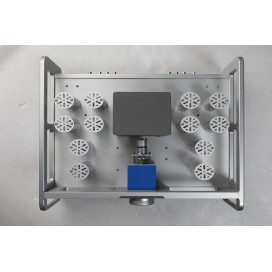
In our range, the Feliks Audio Elise Mk II and the Feliks Audio Euforia EVO are classic OTL amplifiers for headphones like these. Allnic’s HPA-10000 XL and HPA-15000 likewise do without output transformers, and without output capacitors too (OTL/OCL). With up to 10 watts of output, they are specified by the manufacturer for headphones from 15 to 600 ohms, including many planar magnetic models.
Impedance alone, however, does not guarantee an ideal pairing. The individual tuning should also be taken into account. A headphone that already sounds very full-bodied may not need an additionally warm-tuned amplifier. A neutral or slightly bright headphone, on the other hand, can benefit from a harmonious tube stage.
Low-impedance, planar magnetic and sensitive headphones
Low-impedance headphones do not automatically need a lot of power. Driving them becomes demanding above all when they simultaneously have low sensitivity or require high current reserves.
This applies in particular to many planar magnetic headphones. They may need a stable output stage that provides sufficient power and control even at low impedance. Transformer-coupled tube amplifiers and hybrid models are often better suited to this than classic OTL circuits.
Amplifiers in our range that work with output transformers include the Cayin HA-3A and the Cayin HA-300 MK3, both with three switchable impedance ranges, as well as the Feliks Audio Envy series with 300B output tubes, which Feliks designs for dynamic and planar magnetic headphones from 16 to 600 ohms. Amplifiers like these are less tied to one particular type of headphone; Cayin explicitly designed the HA-300 MK3 for demanding planar magnetic models as well. Once you have added headphones and amplifier to the comparison, the “Do they match?” section on our comparison page shows whether the power is sufficient.
With very sensitive headphones and in-ears, other criteria come to the fore. Too much gain can mean that even a small movement of the volume control causes large jumps in loudness. In addition, a slight background noise can become audible that remains unnoticeable with less sensitive models.
Anyone who wants to use in-ears or particularly sensitive over-ear headphones should therefore look specifically for low self-noise, suitable gain settings and finely adjustable volume control. Not every tube amplifier is designed for this use.
What should you look for when buying a tube headphone amplifier?
The choice should not be made solely on the basis of sound descriptions or tube complement. An amplifier must technically match the headphones and at the same time offer the required connections and functions.
Particularly important are:
- Impedance and sensitivity of the headphones: Impedance gives a first indication of the required voltage and current delivery. Only together with sensitivity, however, can you assess how demanding the headphones actually are.
- Output power at the relevant impedance: A single wattage figure is of limited significance. What matters is the power the amplifier provides at the actual impedance of the headphones.
- Output impedance: A high output impedance can be sensible or sonically appealing with certain dynamic headphones. With low-impedance models, however, it can affect frequency response and bass control. This point deserves particular attention with OTL amplifiers.
- Gain and volume control: Different gain settings make it easier to adapt to headphones with widely differing sensitivity. A high-quality volume control is particularly important at low listening levels.
- Headphone outputs: In addition to the classic 6.3 mm jack, many devices offer four-pin XLR or 4.4 mm Pentaconn outputs. A balanced connection does not automatically sound better, though. There is only an advantage if the internal circuit and output stage are designed accordingly.
- Analogue inputs: Pure tube headphone amplifiers usually have analogue RCA or XLR inputs. Digital sources cannot then be connected directly.
If you want to play music from a computer, streamer, CD transport or TV, you will generally need a separate D/A converter. This converts the digital signal into an analogue signal that the amplifier can process.
Some tube amplifiers additionally offer preamp outputs. This allows them to be integrated into a system with active loudspeakers or a separate power amplifier. Further convenience features can include a remote control, several inputs, switchable impedance ranges or level meters.
Placement should also be considered before buying. Tubes generate heat during operation and need sufficient air. The device should therefore not be placed in a completely enclosed cabinet and not directly below sensitive components.
Many tube amplifiers only reach their optimum operating temperature after a short warm-up phase. In addition, tubes are wear parts and will need to be replaced at some point depending on type, operating hours and load. With proper handling, however, this is a normal part of operation and not a fundamental obstacle.
Tube rolling: how much do different tubes change the sound?
Tube rolling refers to replacing the factory-fitted tubes with compatible alternatives. This allows the tuning of a suitable amplifier to be changed within certain limits.
Depending on the tube type, timbre, spaciousness, bass control, dynamics or treble presentation can shift slightly. Some tubes sound a little fuller and softer, others more open or direct. The differences can be audible, but they do not change the fundamental character or the technical limits of the circuit.
Tube rolling should therefore be understood as fine-tuning rather than as a way of turning an unsuitable amplifier into an ideal solution for every headphone.
Tubes must also never be swapped merely because the socket fits. Electrical values, heater voltage, pin assignment and operating point must match the circuit. Therefore use only tube types expressly approved by the manufacturer.
Devices with several tubes may require selected or matched pairs. Before every swap, the amplifier must be completely switched off, disconnected from the mains and sufficiently cooled down. Tubes get very hot during operation and should never be touched immediately after switching off.
Anyone who does not want to experiment with different tubes does not have to forgo a tube headphone amplifier. High-quality models already come with a tuned factory tube complement for regular operation.
Tube or transistor headphone amplifier: which is the better choice?
There is no universally better technology. Tube and transistor amplifiers can both perform at a very high level, but often pursue different design and sonic approaches.
A tube headphone amplifier is particularly interesting if you value vivid timbres, spatial depth and an organic musical presentation. The option of adjusting the tuning with compatible tubes can also appeal to experienced listeners.
Transistor amplifiers are often more compact, more energy-efficient and lower-maintenance. Many models offer a very low output impedance, high current reserves and broad compatibility with different headphones. For sensitive in-ears or frequently changing headphones, they can therefore be the more straightforward solution.
Hybrid amplifiers sit between the two concepts and combine a tube stage with a powerful transistor output stage.
The decision should therefore not be based on a general technology comparison. What matters more is which amplifier drives your existing headphones safely on a technical level and at the same time supports the desired sonic direction.
Finding the right tube headphone amplifier at Level Audio
At Level Audio we do not select our products solely on the basis of technical data or well-known brand names. What matters is whether a device offers a tangible sonic and functional benefit within a high-quality headphone chain.
Our range covers different tube concepts for different applications. These include classic OTL amplifiers from Feliks Audio, which are particularly suited to many medium- and high-impedance dynamic headphones. Also available are powerful transformer-coupled solutions from Cayin, which, depending on the model, can confidently drive low-impedance and planar magnetic headphones as well.
The selection is complemented by further all-tube and hybrid amplifiers with different power reserves, connections and sonic characters.
Which model fits best depends on your headphones, your source, your preferred listening level and your sonic expectations. Future expansions of the system can also play a role in the choice: for example a second pair of headphones, use as a preamplifier or the wish for several impedance settings.
We are happy to help you find a tube headphone amplifier that is not only technically compatible but also complements your existing playback chain in a musically meaningful way. By appointment, we can also advise you in person in our listening room in Bari.
FAQ: Frequently asked questions about our tube headphone amplifiers
What is a tube headphone amplifier?
A tube headphone amplifier uses vacuum tubes for part or all of the signal amplification. Depending on the circuit, it can sound warm and full-bodied or open, dynamic and precise.
Which headphones are tube amplifiers suitable for?
That depends on the circuit concept. OTL amplifiers often suit high-impedance dynamic headphones particularly well, while transformer-coupled and hybrid models can often drive low-impedance or planar magnetic headphones as well.
What does OTL mean in a tube amplifier?
OTL stands for "Output Transformerless". These amplifiers work without output transformers and are often particularly suited to medium- to high-impedance dynamic headphones.
Do I also need a DAC?
With digital sources, usually yes. Many tube headphone amplifiers have analogue inputs only and therefore require a separate D/A converter.
Are tube amplifiers suitable for planar magnetic headphones?
Yes, provided the amplifier delivers enough current and power. Transformer-coupled or hybrid models in particular are suitable for many planar magnetic headphones.
What is tube rolling?
Tube rolling refers to swapping the tubes for compatible alternatives in order to change the sonic tuning slightly. Only tube types approved by the manufacturer may be used.
Do tubes need to be replaced regularly?
Tubes are wear parts, but with normal use they often last several thousand operating hours. Replacement is usually only necessary in the event of audible noise, declining performance or defects.
Can tube amplifiers be used with in-ears?
This is only advisable with suitable, particularly low-noise models. Very sensitive in-ears can make background noise or excessive gain clearly audible.