At a glance
The LCD-MX4 melds technological advances from Audezes Flagship Series with the reliable, accurate driver design of the famous LCD-X to offer incredible detail and sensitivity for studio or home listening.
At a glance
Open-back over-ear planar reference for mixing & mastering
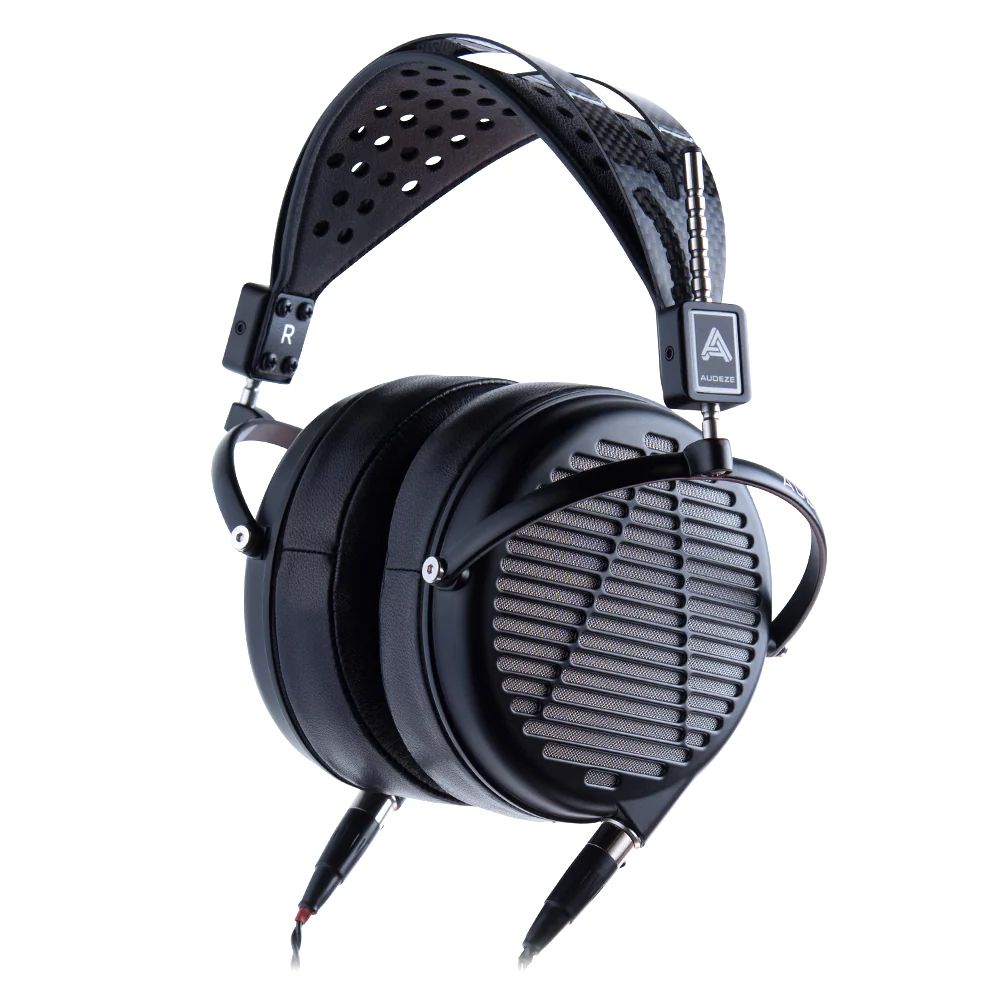
The LCD-MX4 delivers speaker-like reference performance without requiring costly room treatment. Combined with Audeze Reveal+, which creates an AI-generated profile of your hearing, the MX4 places you in world-class studios so you can work consistently from anywhere.
Mix and master with the precision trusted by top engineers worldwide. Highly responsive drivers reveal every detail and create a speaker-like soundstage that translates reliably across systems.
Double Fluxor™ magnet arrays achieve 1.5 Tesla flux density — the most powerful headphone magnetic circuit ever built. Uniforce™ voice coils deliver precise detail and controlled bass. The MX4 is also the most efficient LCD model, working perfectly with interfaces, consoles, and recorders.
A lightweight magnesium chassis, carbon suspension headband, and premium pads provide long-session comfort with minimal fatigue.
Not sure if the Audeze LCD-MX4 is the right model for you? Our guide Which Audeze is right for me? explains the Audeze series and how they differ in sound.
| Style | Over-ear, open-back |
| Transducer type | Planar Magnetic |
| Magnetic structure | Double Fluxor™ array |
| Phase management | Fazor™ |
| Magnet type | Neodymium N50 |
| Diaphragm | Ultra-thin Uniforce™ |
| Transducer size | 106 mm |
| Max power handling | 5W RMS |
| Max SPL | >130 dB |
| Frequency response | 10 Hz – 50 kHz |
| THD | <0.1% @100 dB |
| Impedance | 20 ohms |
| Sensitivity | 105 dB / 1 mW |
| Cable | 1.9 m single-ended 6.3 mm |
| Weight | 575 g |
Frequency response
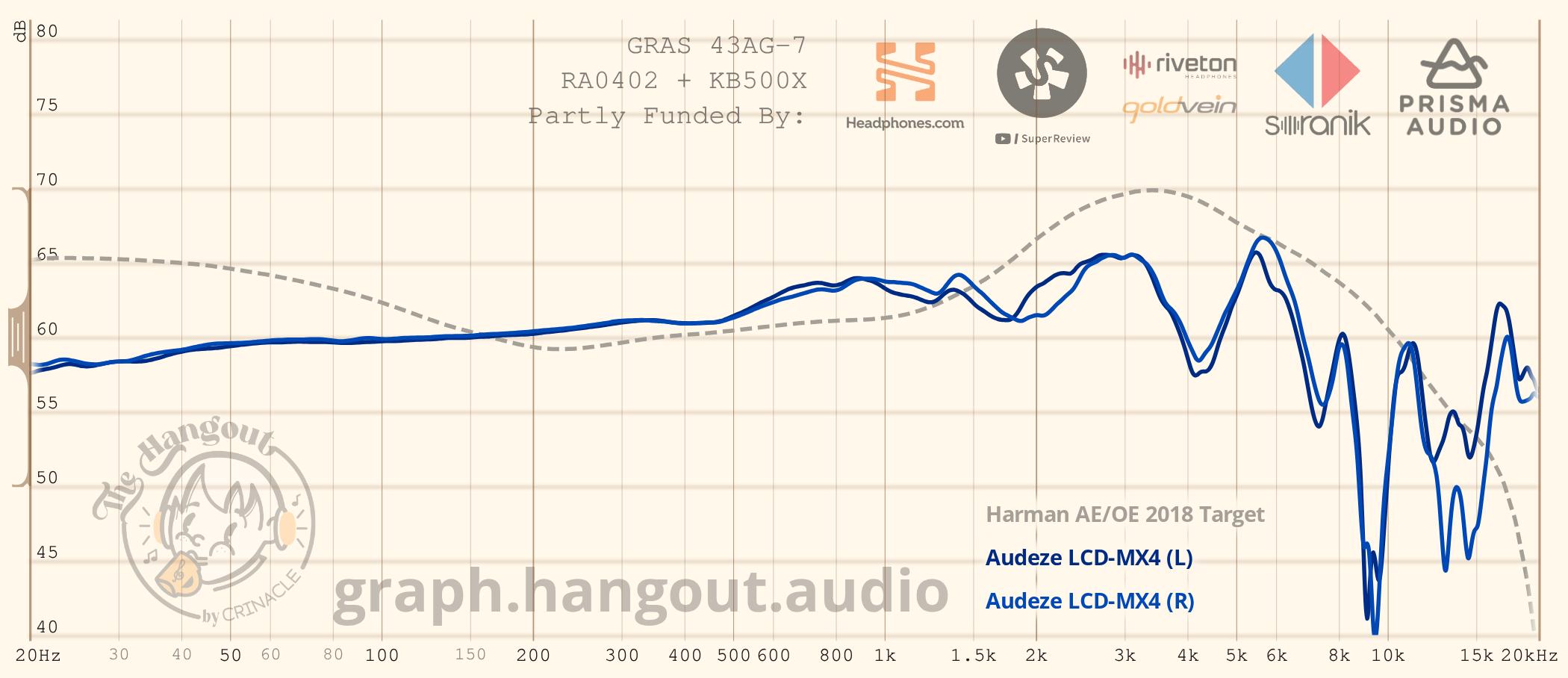
The line marked as target is something you could call the “ideal” curve: a target response derived from research by the Harman group, exploring what kind of headphone tuning tends to be preferred by a broad range of listeners – regardless of age or demographics. This is often referred to as the Harman Target.
From left to right you see sub-bass, bass, mids, and then the curve tilts upward where treble begins. That part of the spectrum is naturally amplified by the shape of the human ear.
Sub-bass sits far below the target – common for open headphones, the Harman target includes a strong bass shelf, the bass is slightly reduced. The lower mids are neutral, the presence region around 3 kHz sits clearly below the target. The treble is strongly tuned more relaxed – never sharp, easy over long sessions, above 10 kHz the curve rolls off. Left and right channels track each other closely, a sign of careful driver matching.
Harman Research: The Perception and Measurement of Headphone Sound Quality – What Do Listeners Prefer?




Overview of Audeze headphone series: From Flagship to Reference, MM, Origins, and Gaming – each with its own sound signature and purpose.