

At a glance
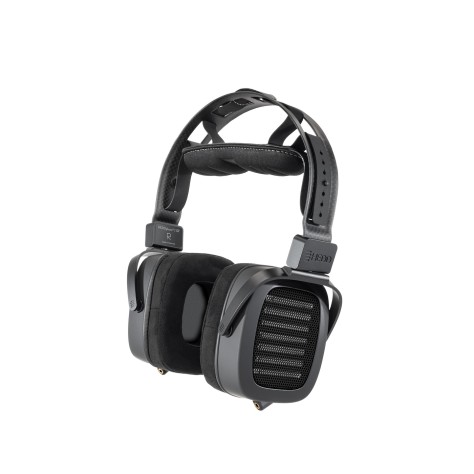
The improved ergonomics and the new driver of the HEDDphone 2, now tuned for hi-fi enthusiasts: HEDDphone 2 GT.
At a glance
Hi-Fi-tuned evolution of the HEDDphone 2 platform
First things first with any new headphone: how does it sound? With the second generation, HEDD Audio responded to feedback from customers who found the original HEDDphone too heavy and too large. The HEDDphone 2 is lighter, more comfortable, and highly adjustable. Its original tuning was aimed at studio use, with a neutral profile and a slight emphasis in the midrange.
But if you simply want to enjoy music, that studio tuning may feel a bit too restrained— and that’s exactly why the HEDDphone 2 GT exists.

While the HEDDphone 2 originally shipped with vegan leather pads, the GT now includes two new pad types in the box: genuine leather and velour—both compatible with the HEDDphone 2 as well.
The cable selection has also expanded. Braided nylon cables with 3.5 mm, 6.35 mm, 4.4 mm balanced, and 4-pin XLR balanced are still included. At launch, a premium 4.4 mm cable is available as an optional upgrade, with more to come.
- New earpads
- New tuning
- Expanded cable options
- Same sensitivity and impedance
| Design | Open-back over-ear headphone |
| Drivers | AMT with full-range VVT® technology |
| Frequency range | 10 Hz – 40 kHz |
| Maximum SPL | 88 dB SPL at 1 mW |
| Impedance | 41 Ω (flat) |
| Power | Min. 200 mW, recommended ≥ 1000 mW |
| Inputs | 3.5 mm jack |
| Cable | Kevlar-infused, braided |
| Pads | Faux leather ear pads and head cushion |
| Weight | 550 g |
Frequency response
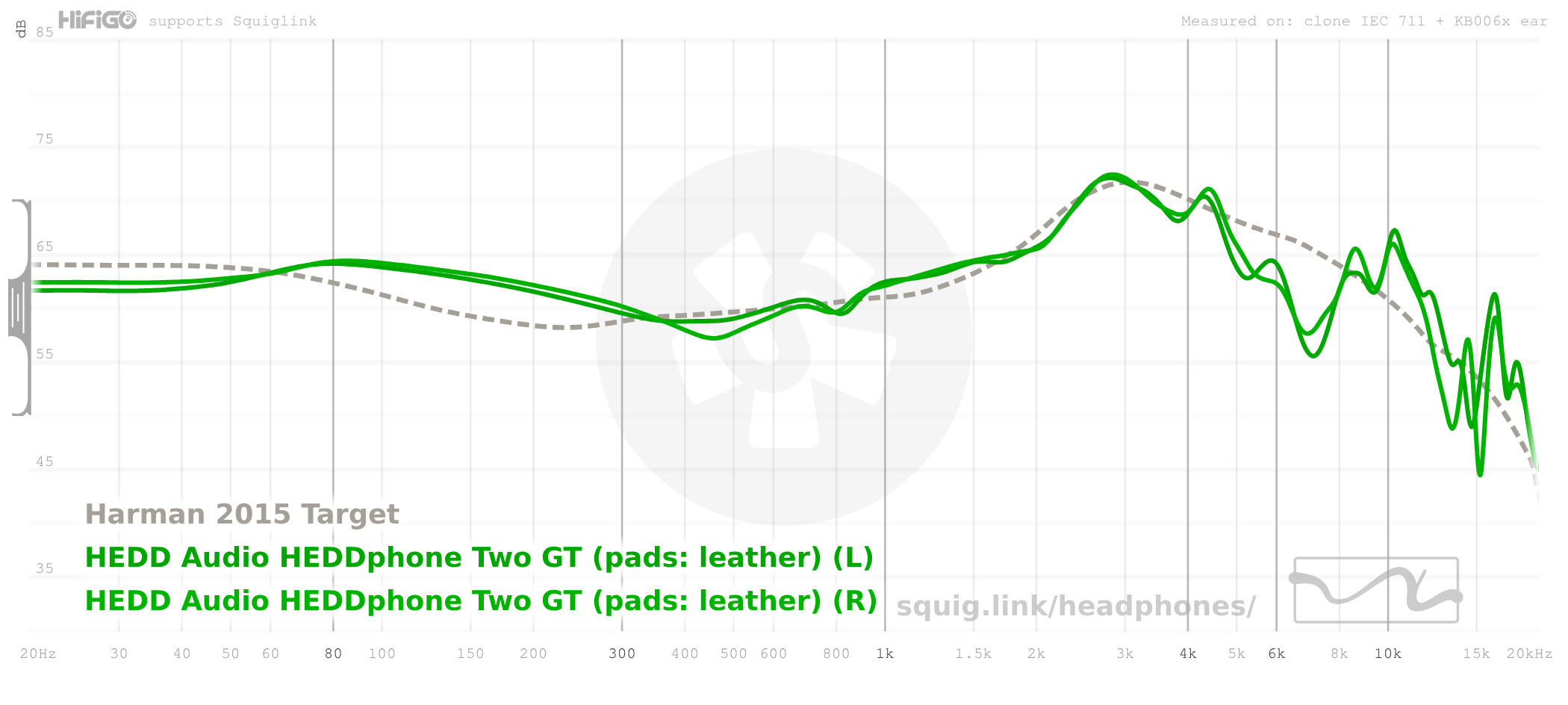
The line marked as target is something you could call the “ideal” curve: a target response derived from research by the Harman group, exploring what kind of headphone tuning tends to be preferred by a broad range of listeners – regardless of age or demographics. This is often referred to as the Harman Target.
From left to right you see sub-bass, bass, mids, and then the curve tilts upward where treble begins. That part of the spectrum is naturally amplified by the shape of the human ear.
Sub-bass sits on the target, the bass is slightly elevated. The lower mids are neutral, the presence region around 3 kHz hits the target. The treble is slightly tuned more relaxed – never sharp, easy over long sessions, above 10 kHz there is a little extra air. Left and right channels track each other closely, a sign of careful driver matching.
Harman Research: The Perception and Measurement of Headphone Sound Quality – What Do Listeners Prefer?