At a glance
Dan Clark Audio Expanse – open-back flagship with AMTS technology, natural tone, wide soundstage and lightweight design, hand-built in California.
At a glance
Open-back flagship planar magnetic headphones
The Dan Clark Audio Expanse is the open-back flagship, bringing the breakthrough technology of the closed STEALTH to an open-back design — with a vast soundstage, smooth treble, and a fuller upper-bass/lower-midrange for an organic, natural presentation.
The patent-pending Acoustic Metamaterial Tuning System (AMTS) reduces high-frequency standing waves, delivering reference-level detail, clarity, and calm without harshness. The enlarged 4th-generation v-Planar driver offers strong dynamics with very low distortion and improved bass extension.

A new diaphragm tensioning system ensures more uniform tension and tighter driver matching. FEA/CFD-optimized motor structures improve force uniformity and smooth acoustic paths — for an effortless, finely resolved reproduction from delicate string plucks to full orchestral crescendos.
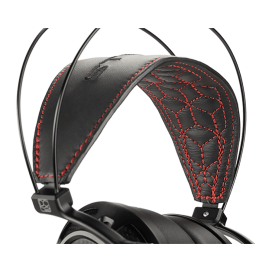
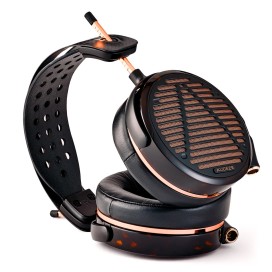
Expanse features a self-adjusting suspension with a pre-formed, quilted headband, composite microfiber/protein-leather pads, and a chassis of aluminum, carbon fiber, and titanium. At just 418 g, weight is evenly distributed for long-session comfort.
Folding gimbals enable a compact travel case; carbon/aluminum composite shells maximize stiffness at low weight. Handcrafted in San Diego.
| Principle | Magnetostatic (Planar Magnetic), over-ear |
| Transmission | Wired |
| Headphone cable | Replaceable |
| Connector | 4-pin Hirose |
| Driver size | 76 × 51 mm |
| Frequency response | 10 – 20,000 Hz |
| Weight | 0.42 kg |
| Series | Dan Clark Audio over-ear headphones |
Frequency response
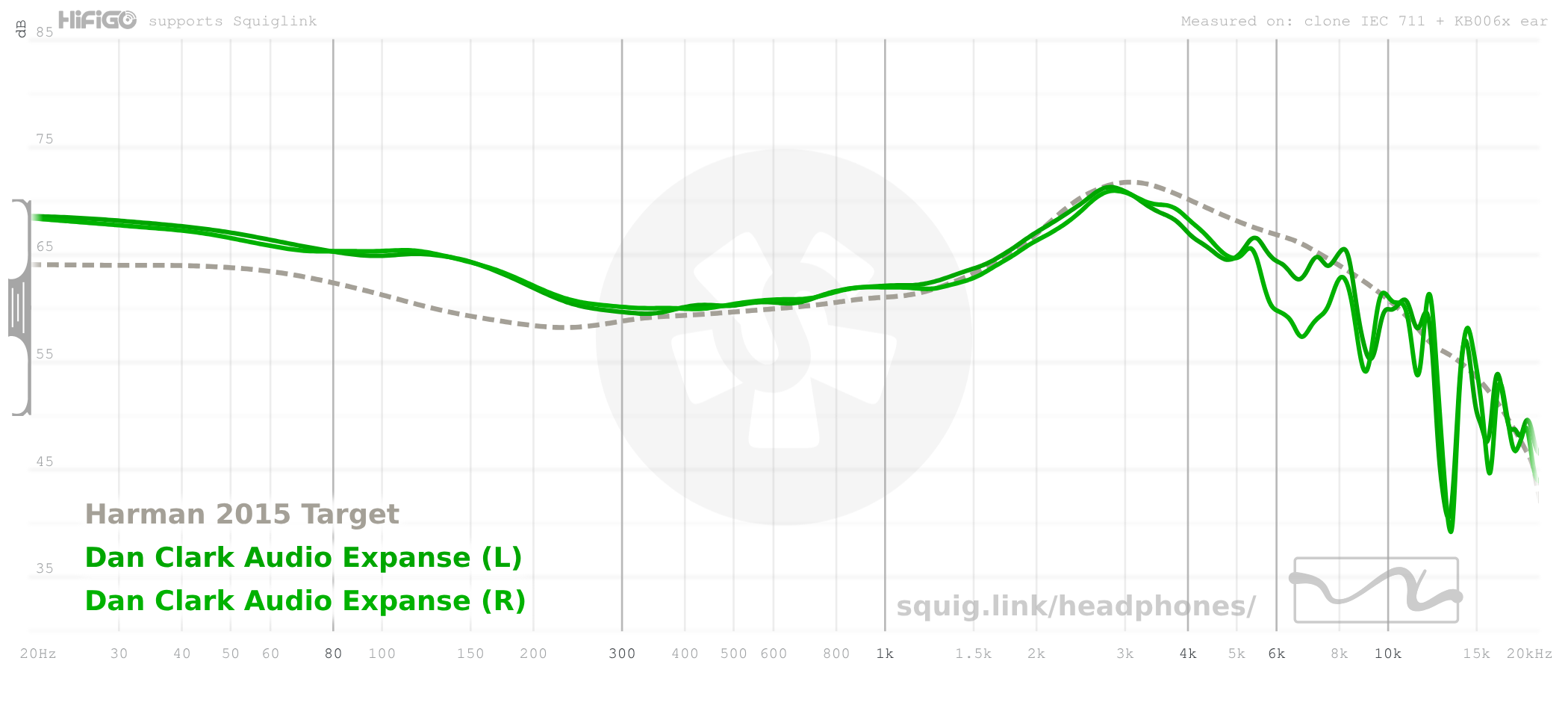
The line marked as target is something you could call the “ideal” curve: a target response derived from research by the Harman group, exploring what kind of headphone tuning tends to be preferred by a broad range of listeners – regardless of age or demographics. This is often referred to as the Harman Target.
From left to right you see sub-bass, bass, mids, and then the curve tilts upward where treble begins. That part of the spectrum is naturally amplified by the shape of the human ear.
Sub-bass sits slightly above the target, the bass is slightly elevated. The lower mids are neutral, the presence region around 3 kHz hits the target. The treble is clearly tuned more relaxed – never sharp, easy over long sessions, above 10 kHz it gets a little darker. Left and right channels track each other closely, a sign of careful driver matching.
Harman Research: The Perception and Measurement of Headphone Sound Quality – What Do Listeners Prefer?