

At a glance
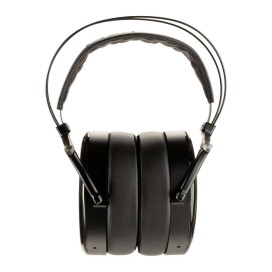
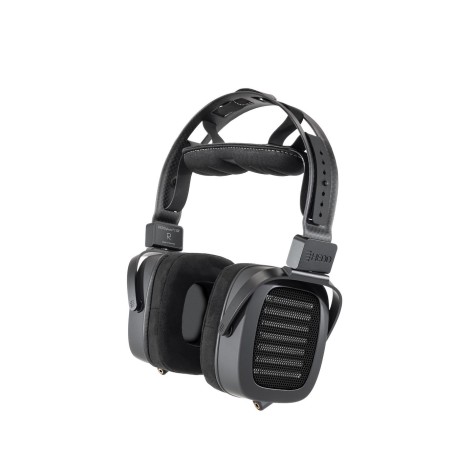
HEDDphone TWO GT UNPLUGGED – High-end AMT headphones with warm tuning for an exceptional audiophile experience.
At a glance
Engineered for those who know exactly what they want
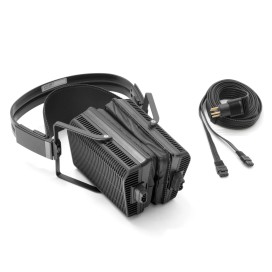
The HEDDphone® TWO GT UNPLUGGED delivers the same reference-grade performance based on HEDD’s full-range Air Motion Transformer (AMT) technology — intentionally supplied without a cable.
Designed for experienced audiophiles and professionals who already own their preferred cables, this version removes redundancy and offers complete freedom of connection. No shortcuts, no hidden compromises — just the headphone in its most direct and distilled form.
The UNPLUGGED Edition is ready to meet your system on your terms.
Developed with the audiophile world in mind, the HEDDphone® TWO GT is designed for musical enjoyment rather than analytical studio monitoring.
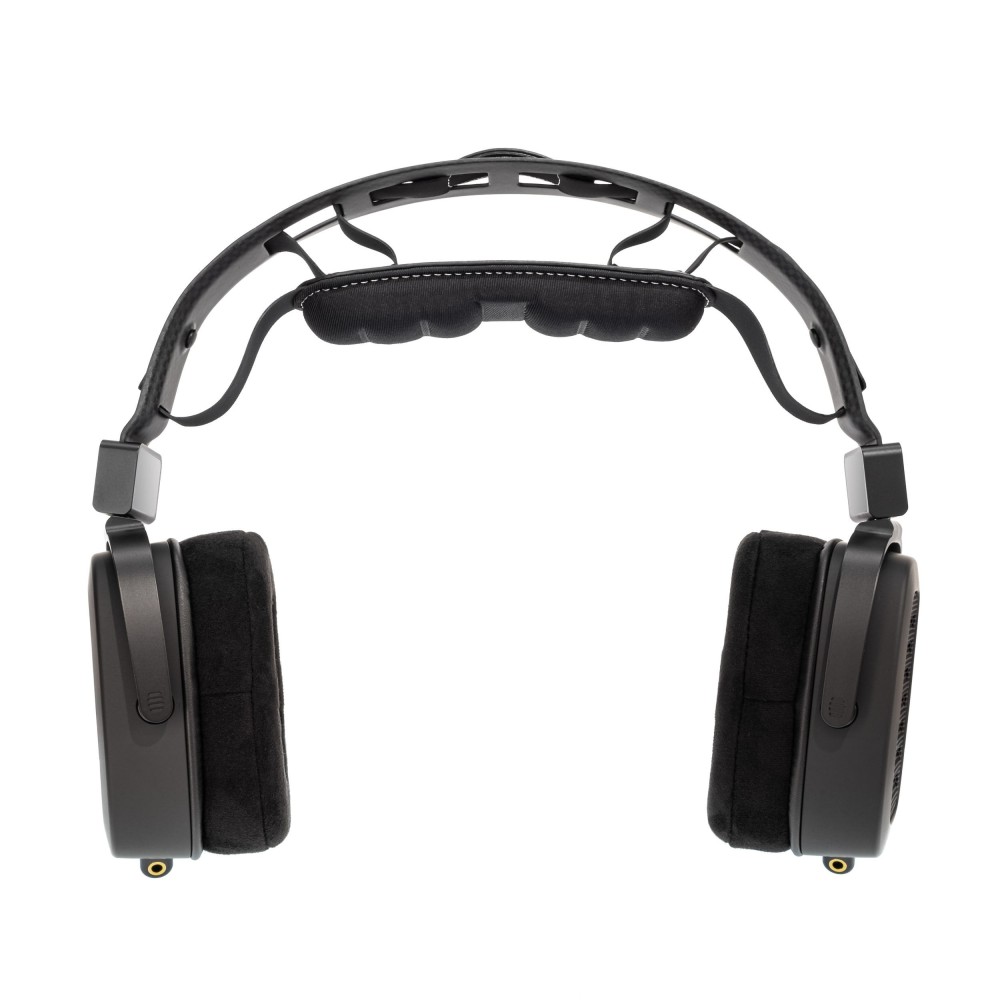
Based on the acclaimed HEDDphone® TWO, several key elements have been refined: a warmer tuning that balances precision and emotion; an updated AMT driver with even lower distortion; enhanced visual detailing on the logo and HEDDband stitching; and improved comfort through premium velour earpads.
The result is a richer, smoother yet still exceptionally fast and detailed sound, paired with an innovative ergonomic design for a luxurious listening experience.
| Design | Open-back, over-ear |
| Drivers | Air Motion Transformer with VVT and multi-layer Kapton polyimide diaphragm |
| Frequency Range | 10 Hz – 40 kHz |
| Maximum SPL | 88 dB SPL @ 1 mW |
| Impedance | 41 Ω (flat) |
| Power Requirement | Minimum 200 mW, recommended ≥ 1000 mW |
| Inputs | Dual 3.5 mm mono jacks |
| Weight | 550 g |
| Earpads | Velour |
| Cable | Not included – available separately |
Frequency response
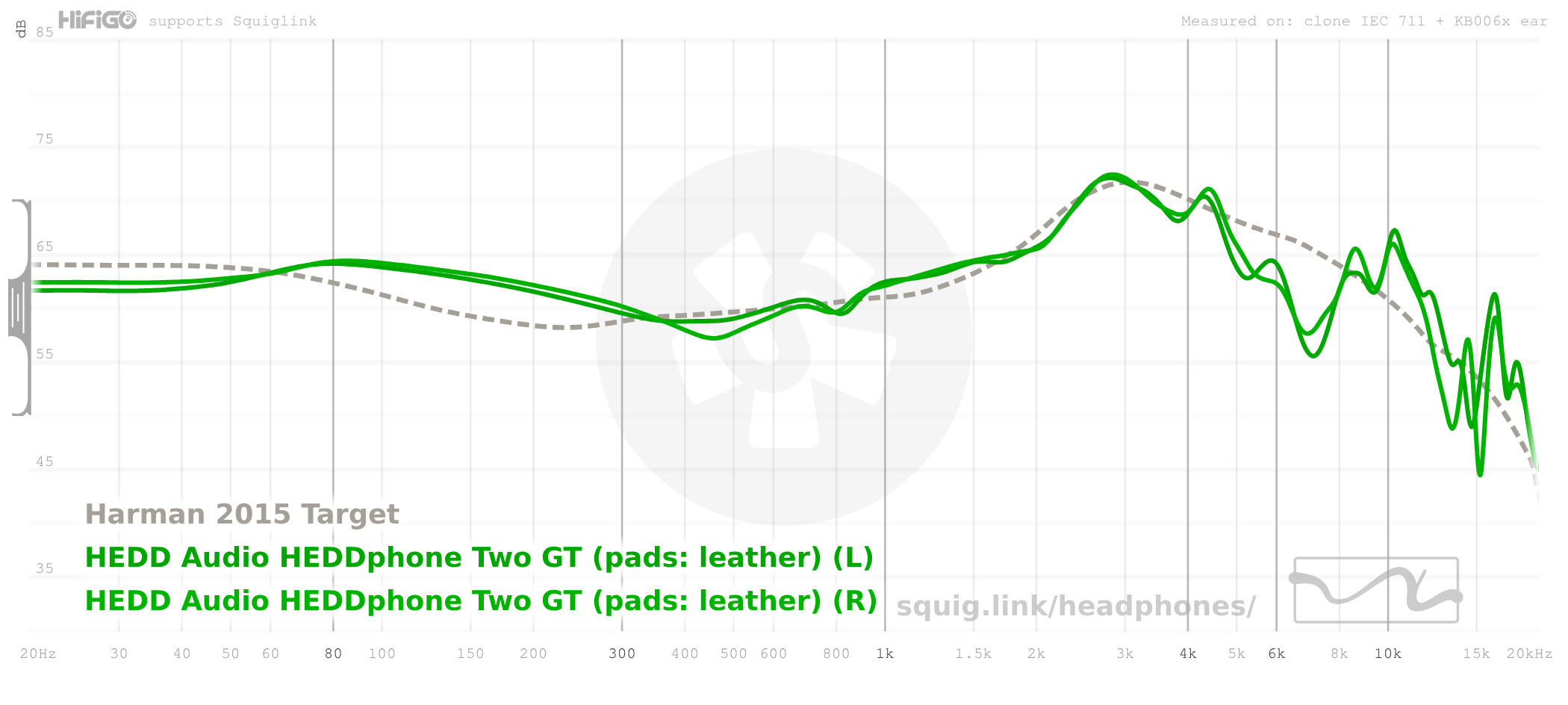
The line marked as target is something you could call the “ideal” curve: a target response derived from research by the Harman group, exploring what kind of headphone tuning tends to be preferred by a broad range of listeners – regardless of age or demographics. This is often referred to as the Harman Target.
From left to right you see sub-bass, bass, mids, and then the curve tilts upward where treble begins. That part of the spectrum is naturally amplified by the shape of the human ear.
Sub-bass sits on the target, the bass is slightly elevated. The lower mids are neutral, the presence region around 3 kHz hits the target. The treble is slightly tuned more relaxed – never sharp, easy over long sessions, above 10 kHz there is a little extra air. Left and right channels track each other closely, a sign of careful driver matching.
Harman Research: The Perception and Measurement of Headphone Sound Quality – What Do Listeners Prefer?