

At a glance
The headphone that brought Meze into the spotlight and that kickstarted their fame as a renowned hifi brand, now refinded: the 99 Classics Gen 2
At a glance
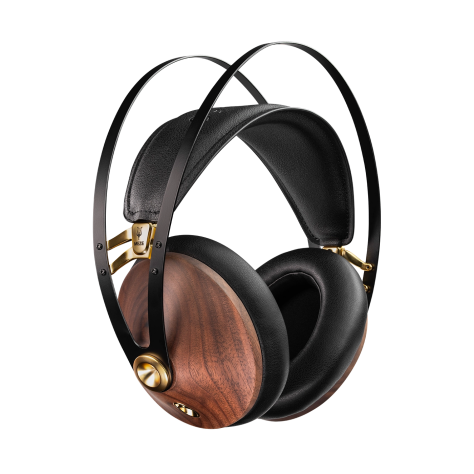
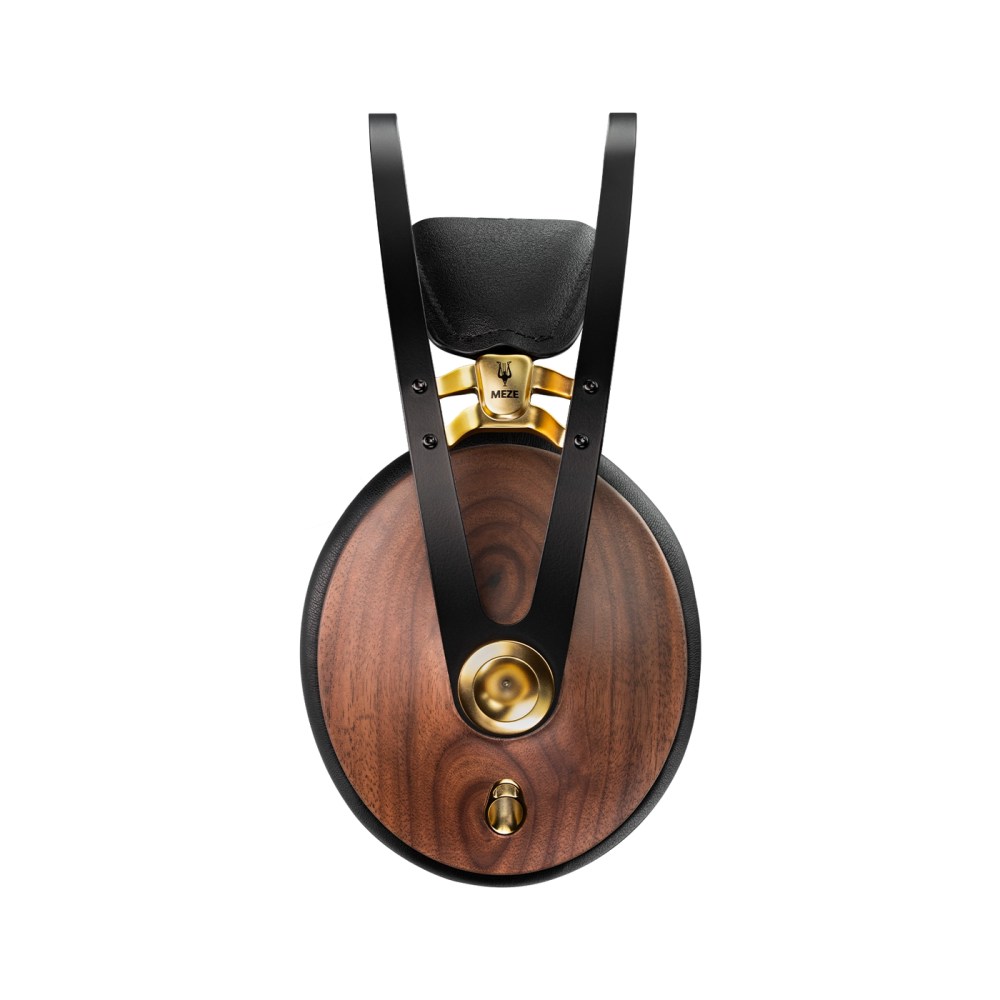
Dynamic over-ear headphones with real wood earcups
The Meze 99 Classics combine real wood earcups, premium materials, and a well-balanced tuning—timeless design, natural sound, and effortless drivability in true Meze fashion.
Precision-machined real wood earcups
Each solid-wood cup is made to tight tolerances—not just a housing, but an acoustically active component that helps control resonances and internal reflections.
Long-session comfort
A self-adjusting headband on a flexible steel/zinc/manganese alloy frame, with synthetic leather support and memory-foam pads for natural isolation. Weight: only 260 g.
Easy to drive
Dynamic 40 mm drivers, 15 Hz – 25 kHz frequency response, 16 Ω and 103 dB sensitivity—great with a smartphone, tablet, or portable DAP; a dedicated amp can add extra headroom.
Generous accessory bundle
Two detachable OFC Y-cables (one with microphone), 6.3 mm adapter, airplane adapter (dual-mono), accessory pouch, and a semi-hard carrying case.
| Driver | Dynamic, 40 mm |
| Frequency Response | 15 Hz – 25 kHz |
| Sensitivity | 103 dB at 1 kHz, 1 mW |
| Impedance | 16 Ω |
| Rated Input Power | 30 mW |
| Maximum Input Power | 50 mW |
| Cable | Detachable Kevlar OFC cable |
| Plug | 3.5 mm |
| Weight | 260 g |
| Earcups | Walnut |
Frequency response
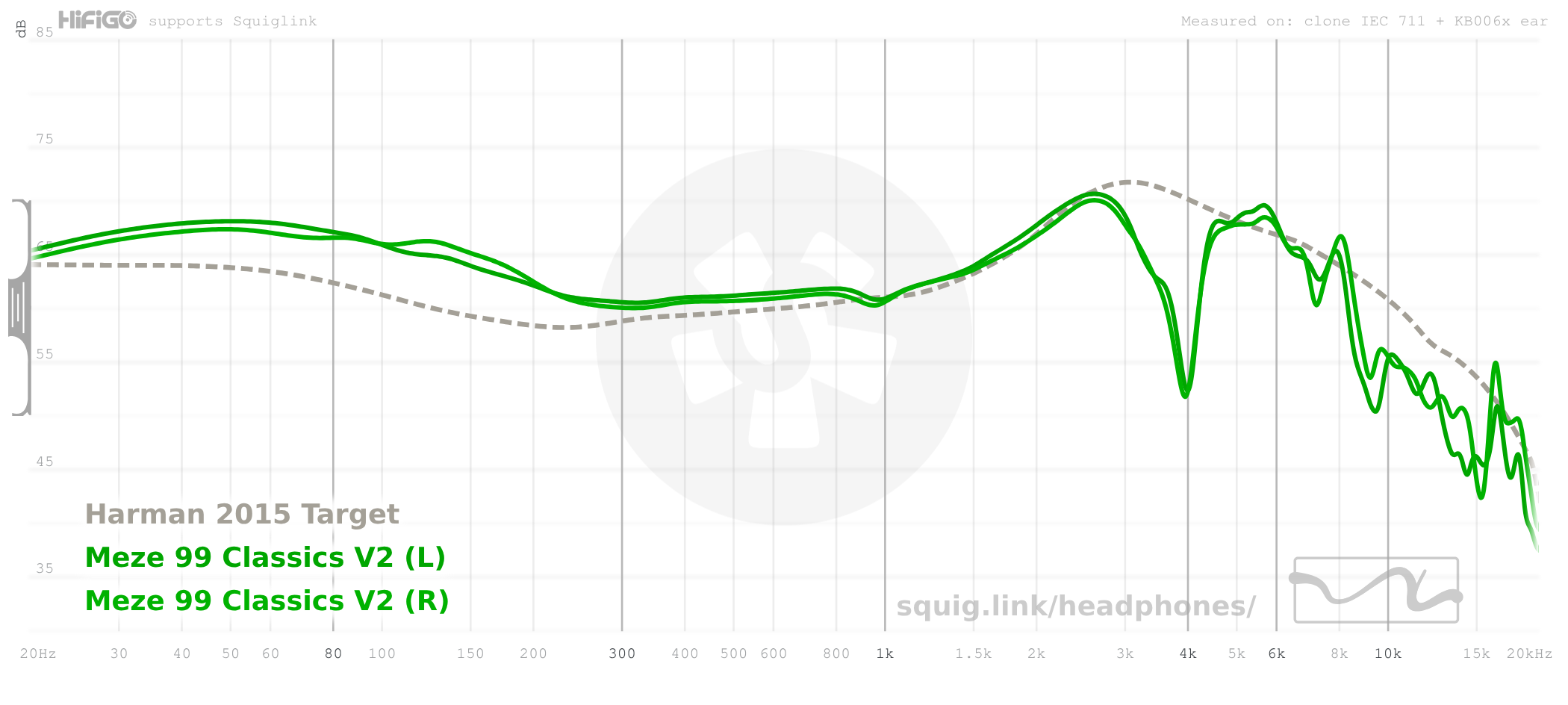
The line marked as target is something you could call the “ideal” curve: a target response derived from research by the Harman group, exploring what kind of headphone tuning tends to be preferred by a broad range of listeners – regardless of age or demographics. This is often referred to as the Harman Target.
From left to right you see sub-bass, bass, mids, and then the curve tilts upward where treble begins. That part of the spectrum is naturally amplified by the shape of the human ear.
Sub-bass sits slightly above the target, the bass is slightly elevated. The lower mids are neutral, the presence region around 3 kHz sits clearly below the target. The treble is slightly tuned more relaxed – never sharp, easy over long sessions, above 10 kHz the curve rolls off. Left and right channels track each other closely, a sign of careful driver matching.
Harman Research: The Perception and Measurement of Headphone Sound Quality – What Do Listeners Prefer?