- New


At a glance
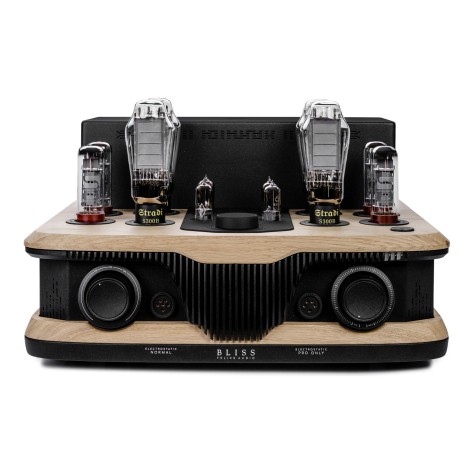
Feliks Audio Bliss – fully balanced Class A tube amplifier with four 300B for electrostatic headphones: adjustable Pro and Normal bias, up to 520 V RMS.
At a glance
Fully balanced 300B tube amplifier for electrostatic headphones – with adjustable bias voltage for Pro and Normal bias
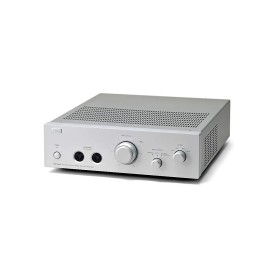
The Bliss is the first amplifier Feliks Audio has built for electrostatic headphones – after more than four years of development. It was first shown as a prototype at High End Munich in 2024, and Feliks presented the finished version at the same show a year later, where Soundnews and Headfonia each gave it a “Best of Show” award. Technically, the Bliss is a fully balanced differential amplifier running in pure Class A – an all-tube design with no output transformers.
Four 6E5P (NOS) tubes work as triodes in the driver stage. The output stage uses four 300B – Stradi S300B from the factory, matched in pairs by the Korean manufacturer – in a fully symmetrical circuit that Feliks calls a “Hedge” topology: it avoids the Miller effect and keeps the frequency response wide open. Four EL34 handle precise current control and also carry heat away, so the Bliss runs comparatively cool and within tight tolerances. The result is up to 520 V RMS (1,470 V peak-to-peak) at a gain of around 250×.
Any 300B with the standard 5 V filament voltage will fit, so tube rolling is open to you. Feliks measures the supplied tubes and records their characteristics under the serial number. If a single tube ever fails, Feliks can pick a matching one instead of replacing the whole quartet.
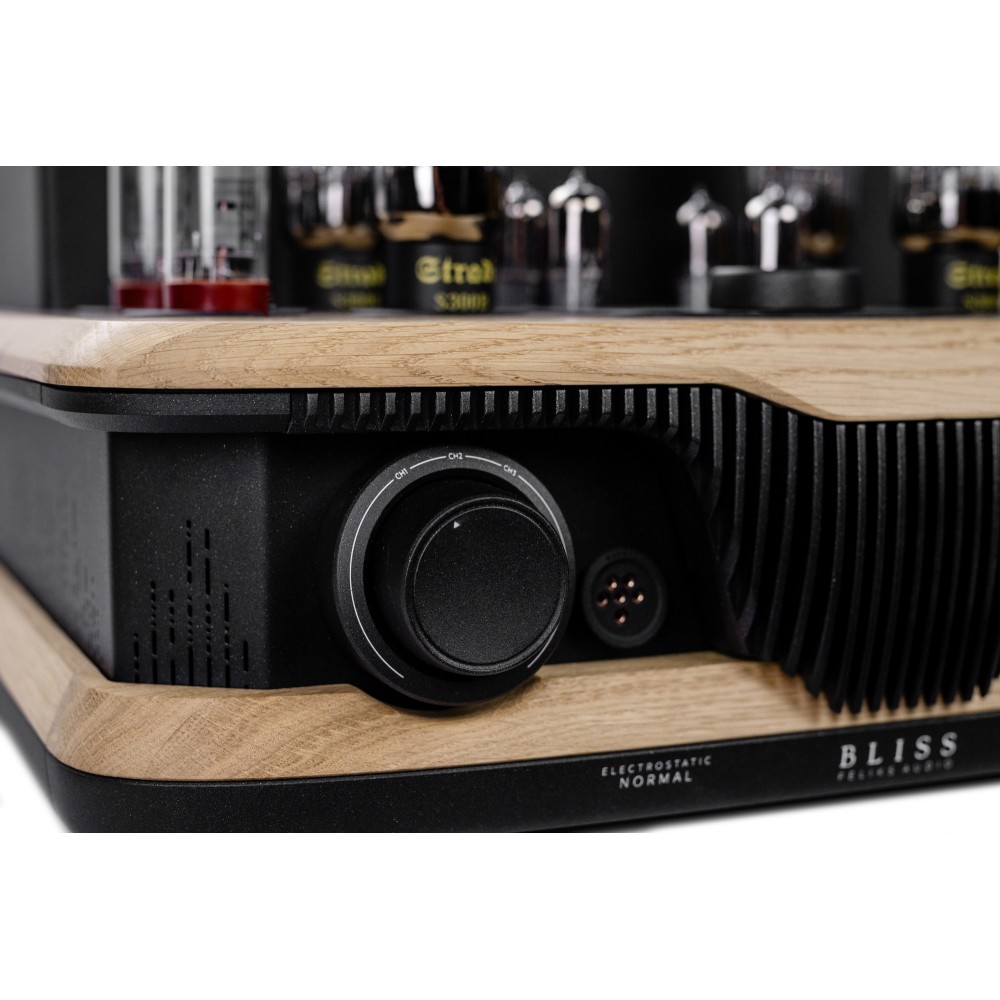
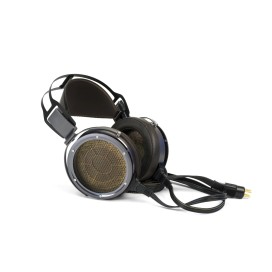
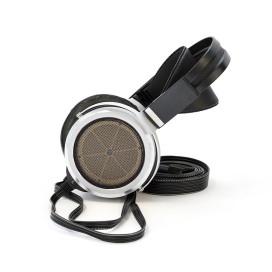
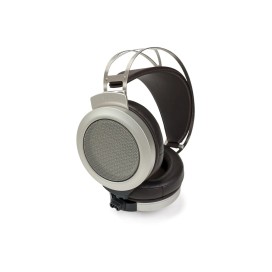
The Bliss is designed for all common electrostatic headphones. It has a 5-pin Pro socket (typically 580 V bias, for example for the Stax SR-009S or SR-X9000) and a 6-pin Normal socket (typically 230 V) for older models. A single knob sets the bias voltage for both sockets together: 240 to 700 V at the Pro socket, and always half of that at the Normal socket. Use one pair of headphones at a time; the free socket stays closed with the supplied protective cap.
Two RCA inputs and one balanced XLR input are available, and input sensitivity can be switched between 2 and 4 V. Feliks recommends a DAC with a strong output level of 5 to 10 V. Lundahl transformers at the input prepare the signal for the balanced driver stage, a balanced 24-step DACT stepped attenuator sets the volume, and each channel has its own shielded, resin-encapsulated toroidal transformer from Toroidy. Automatic mains voltage adaptation compensates for fluctuations in the mains supply.
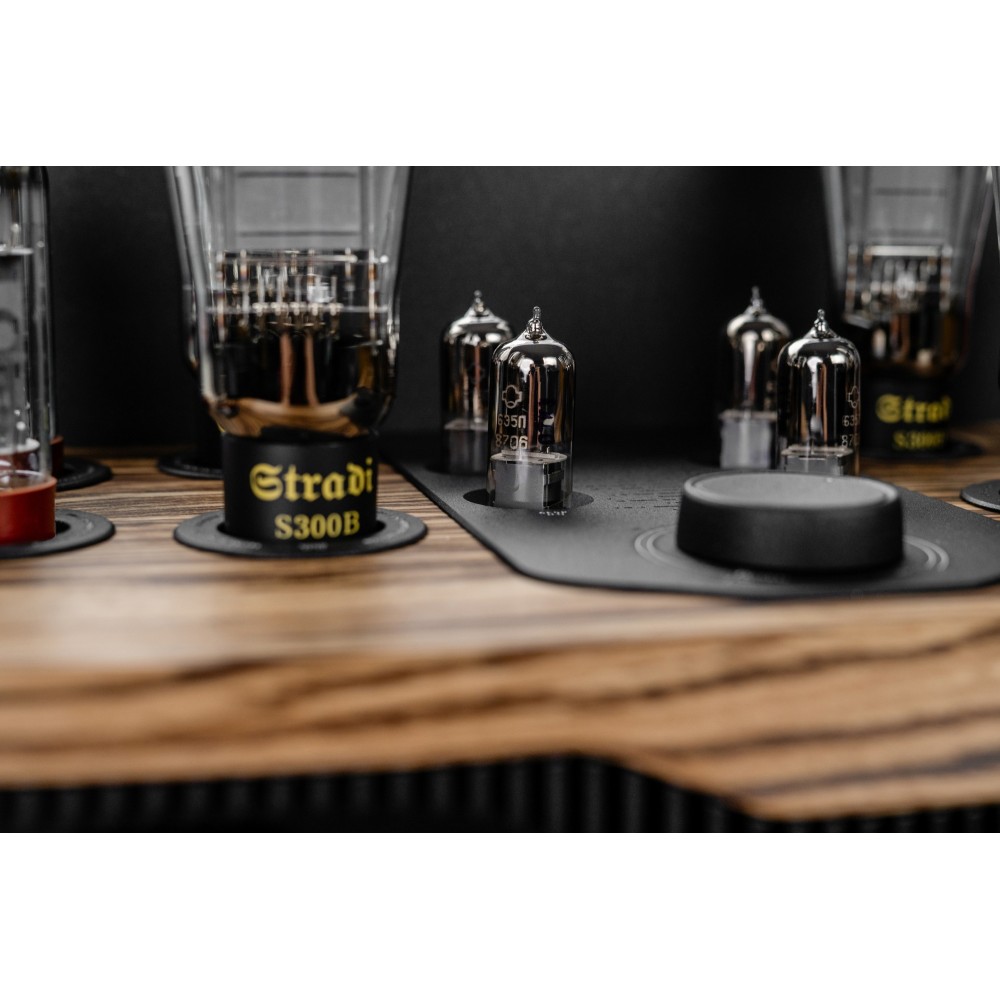
Every Bliss is built by hand in Poland, with components from Vishay, Dale, Nichicon and Jantzen, in-house internal wiring and point-to-point soldering at the critical points. Feliks machines and polishes the solid wood itself and cures it in several steps against the heat of the tubes. You can choose oak, American walnut or zebrano; other woods are available on request. With a footprint of 47 × 47 cm and a weight of 26 kg, the Bliss needs a permanent place in your listening room.
Important: The Bliss is built exclusively for electrostatic headphones; dynamic and planar magnetic headphones must not be connected. According to Feliks, it should not run for more than eight hours at a time and should then cool down for at least an hour.
Soundnews – High End Munich 2025 show report (Vitalie Sandu)
“One truth stands clear: when it comes to designing tube amplifiers that are both ferocious and beautiful, the Feliks brothers redefine the limits of possibility.”
Award: Best of Show, High End Munich 2025
Headfonia – High End Munich 2025 show report
“The Bliss is a true masterpiece in both design and tuning.”
For anyone who wants to drive electrostatic headphones – such as a Stax SR-X9000 or SR-009S – with an all-tube amplifier, without compromise in voltage or effort. Thanks to the adjustable bias, the Bliss suits current Pro-bias models as well as older Normal-bias headphones. For dynamic and planar magnetic headphones, we recommend the Envy or the EOS.
| Design | Fully balanced tube amplifier for electrostatic headphones, Class A, no output transformers |
| Driver tubes | 4 × 6E5P (NOS), triode-connected |
| Power tubes | 4 × 300B (Stradi S300B), 4 × EL34 |
| Maximum output voltage | 520 V RMS (1,470 V peak-to-peak) at 1 kHz |
| Gain | approx. 250× |
| Headphone outputs | Pro bias 5-pin (580 V), Normal bias 6-pin (230 V) |
| Bias voltage (adjustable) | Pro socket 240–700 V, Normal socket 120–350 V |
| Inputs | 2 × RCA (single-ended), 1 × XLR (balanced) |
| Input sensitivity | 2 V / 4 V (switchable) |
| Input impedance | 10 kΩ (RCA and XLR) |
| Volume control | DACT stepped attenuator, 24 steps, balanced |
| Transformers | Lundahl input transformers, Toroidy toroidal transformers per channel |
| Mains voltage | 230 V or 120 V, 50/60 Hz, automatic mains voltage adaptation |
| Power consumption | 250 W |
| Dimensions (W × D × H) | 47 × 47 × 29.5 cm with tubes, 47 × 47 × 27 cm without tubes |
| Weight | 26 kg |
| Finishes | Oak, American walnut, zebrano |
| In the box | Amplifier, 4 × 6E5P, 4 × 300B, 4 × EL34, power cord, protective caps for the headphone sockets, anti-vibration elements with spikes, user manual, warranty card |