

At a glance
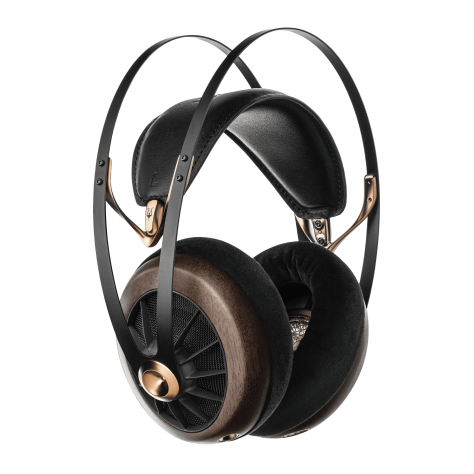
One of the best looking, most comfortable headphones that breaks the price barrier for airy and open, yet punchy and fun - the Meze 109 Pro!
At a glance
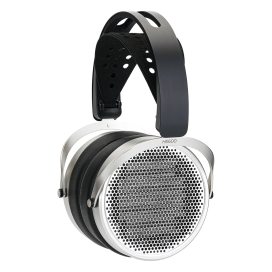
Open-back dynamic over-ear headphones with 50 mm driver and walnut earcups
Meze really delivered something special here:
Everything Meze makes is comfortable and great-looking—but the Meze 109 Pro doesn’t need to hide sonically either. Quite the opposite.
To create a diaphragm that’s light, fast, and still low in distortion, Meze ended up with a dual-composite cone design—the second cone improves treble reproduction, helping the headphone sound open and airy.
To add stiffness at the same time, Meze developed a combination of beryllium-coated polymer, a cellulose and carbon-fiber composite, and a copper–zinc alloy. In addition, the spider that keeps the diaphragm aligned is made as acoustically transparent as possible—supporting the airy presentation together with the outer grille.
And yet the 109 Pro can still be described as warm: it doesn’t lack bass at all, reaching beautifully deep into the lowest registers.
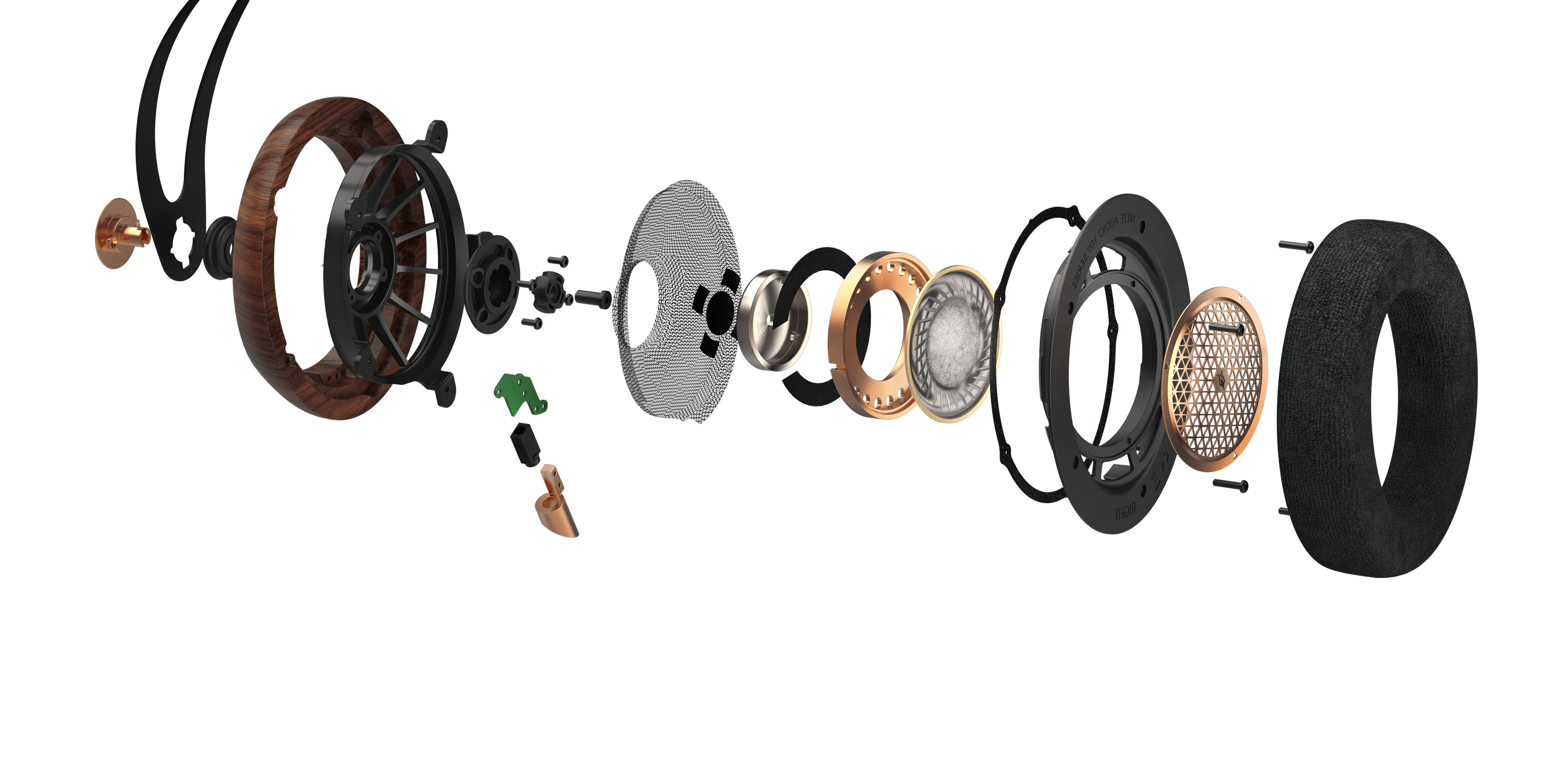
Velour pads, together with a softly suspended leather headband, provide long-lasting comfort—and the included hard case protects the headphones on the go. A wonderfully rounded, flexible package.
| Driver Size | 50 mm |
| Frequency Response | 5 Hz – 30 kHz |
| Sensitivity | 112 dB SPL @ 1 kHz, 1 mW |
| Impedance | 40 Ω |
| Weight | 375 g (13 oz) |
| Earcups | Walnut |
| Case | Hard case |
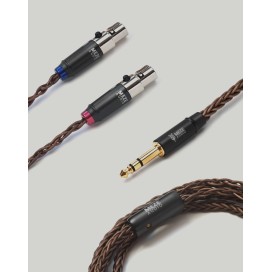
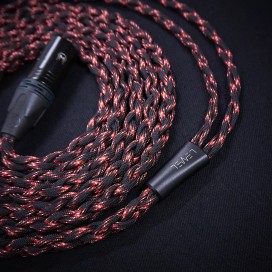
| Included Cables | 1.5 m soft TPE cable with black aluminum splitter and 3.5 mm jack 3 m soft TPE cable with black aluminum splitter and 3.5 mm jack |
| Headphone Connector | 3.5 mm jack plug |
| Adapter | 6.3 mm adapter |
Frequency response
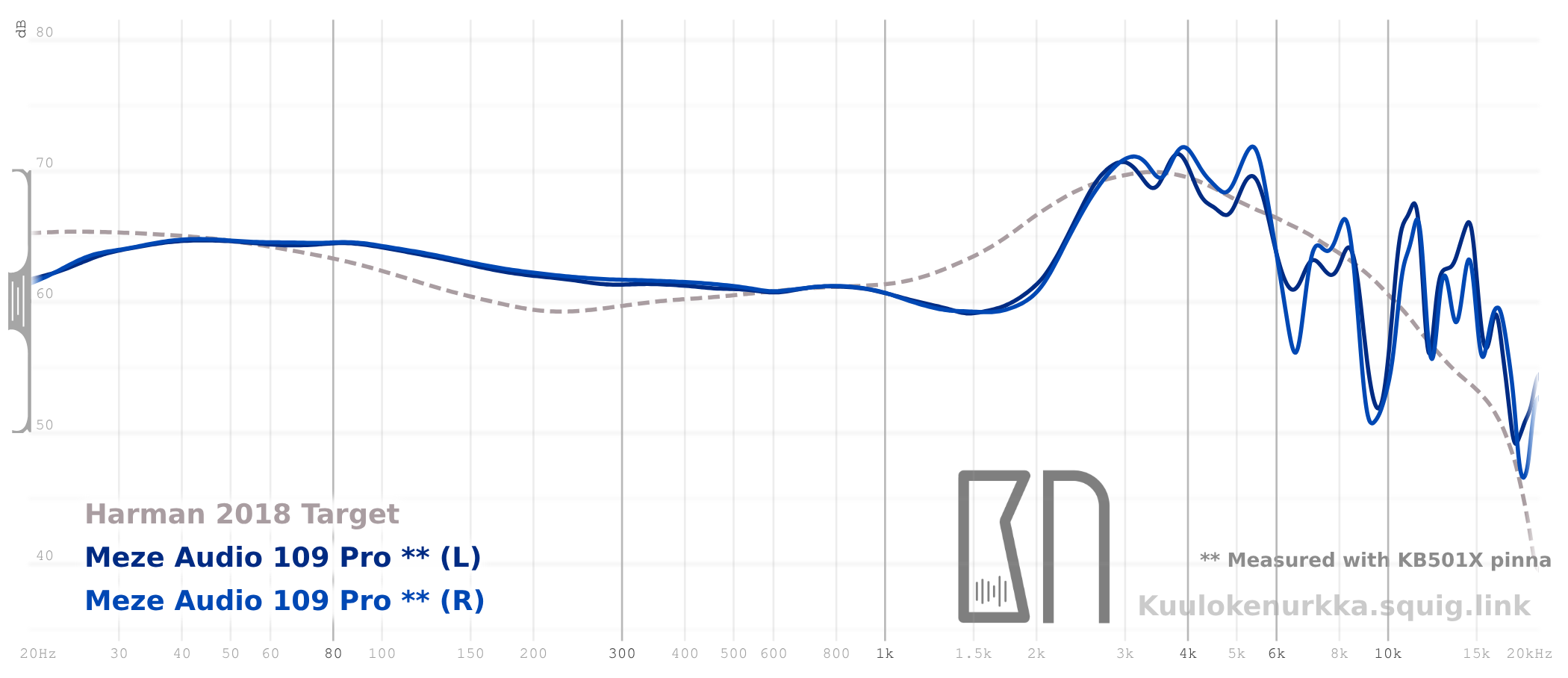
The line marked as target is something you could call the “ideal” curve: a target response derived from research by the Harman group, exploring what kind of headphone tuning tends to be preferred by a broad range of listeners – regardless of age or demographics. This is often referred to as the Harman Target.
From left to right you see sub-bass, bass, mids, and then the curve tilts upward where treble begins. That part of the spectrum is naturally amplified by the shape of the human ear.
Sub-bass sits slightly below the target, the bass follows the target curve. The lower mids are neutral, the presence region around 3 kHz sits slightly below the target. The treble is slightly tuned more relaxed – never sharp, easy over long sessions, above 10 kHz there is a lot of extra air. Left and right channels track each other closely, a sign of careful driver matching.
Harman Research: The Perception and Measurement of Headphone Sound Quality – What Do Listeners Prefer?