
Filter By
New products
New products


Planar magnetic headphones for discerning music lovers
Planar magnetic headphones captivate with their precise transient response, their high resolving power and their controlled, deep-reaching bass. Discover selected planars from leading manufacturers at Level Audio: from your first step into planar magnetic driver technology to the uncompromising high-end headphone.
-

![]() Delivery in approx. 4–6 weeks (handcrafted to order)
ZMF Caldera Open
€3,999.00The ZMF Caldera combines planar precision with dynamic character. Featuring CAMS, Atrium Damping, and zebrawood, it delivers deep bass, a wide soundstage, and natural musicality — ZMF’s ultimate interpretation of a planar headphone.
-
In Stock
Susvara Open Box
Some call the Susvara the best planar magnetic headphone on the planet. The lightweight construction and cavernous earcups make it a comfortable one that can be worn for hours at a time.
-
On order
HiFiMAN Susvara
€6,000.00Some call the Susvara the best planar magnetic headphone on the planet. The lightweight construction and cavernous earcups make it a comfortable one that can be worn for hours at a time.
-
In Stock
Erzetich Charybdis
€2,999.00Flagship planar-magnetic headphones – uncompromising clarity and mature sound for experienced listeners.
-
![]() Delivery in approx. 4–6 weeks (handcrafted to order)
ZMF Caldera Closed
€3,999.00The Caldera Closed combines planar precision with isolation and ZMF’s musicality. Featuring CAMS, ADS, and Zebrawood cups, it delivers sub-bass power, dynamic agility, and artisan beauty — the ultimate closed planar headphone.
-
On order
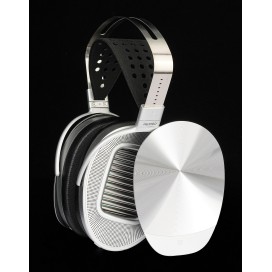
HiFiMAN HE1000 Unveiled
€2,399.00The latest version of the HE1000 platform, with refined mids, more natural highs and unprecedented transparency.
-
![]()
- New
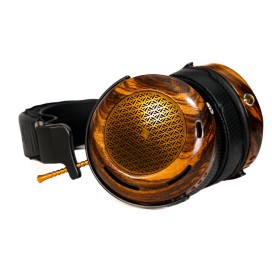
Limited edition, while available: we confirm availability and delivery date (approx. 6–10 weeks) after your orderZMF Caldera Open LTD Teak
€4,099.00The open Caldera in teak as a numbered one-off from ZMF: you choose one of the sets with its fixed specification and the plug. Delivery in approx. 6–10 weeks.
-
![]()
- New
Limited edition, while available: we confirm availability and delivery date (approx. 6–10 weeks) after your orderZMF Caldera Closed LTD Teak
€4,099.00The closed-back Caldera in teak as a numbered one-off from ZMF: you choose one of the sets with its fixed specification and the plug. Delivery in approx. 6–10 weeks.
-
![]() On order
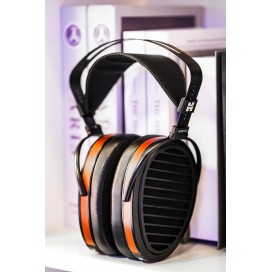
HiFiMAN Arya Organic
€749.00A big suprise from HiFiMAN: The Arya, a successful series of headphones for many years that had only one "flaw" left worth talking about: There was too much energy in the treble for some, and the mids were a smidge too thin. HiFiMAN took this feedback and came out with the Organic: Treble balanced out by a stronger bass, a bit fuller in the mid section, but still with a fantastic resolution and stage presentation. An absolute allrounder.
-
![]() On order
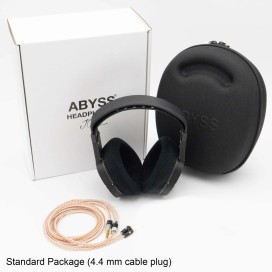
Abyss AB1266 Phi TC
€5,995.00Reference planar headphone delivering ultra-high resolution, powerful bass and luxurious long-term comfort: AB1266 Phi TC
Extra ear pads as a bundle: order an additional pair of Abyss ear pads together with this headphone and we automatically deduct 25% from the pad price in the cart.
-
![]() On order
HiFiMAN Susvara Unveiled
€8,500.00HiFiMAN has redefined the standards of audiophile-grade headphones with the introduction of the Susvara Unveiled Planar Magnetic Headphones. As the successor to the acclaimed Susvara model, this new flagship promises an unparalleled auditory experience. The completely open design, free from traditional grilles, allows for an extraordinary level of musical detail, making it a must-have for discerning audiophiles.
-
![]() On order
Abyss JOAL
€1,895.00A high-performance planar headphone with stunning detail, deep bass and a vast, immersive soundstage – every track sounds like the master tape. JOAL.
Extra ear pads as a bundle: order an additional pair of Abyss ear pads together with this headphone and we automatically deduct 25% from the pad price in the cart.
-
![]() On order
Audeze LCD-2 Classic
€999.00A warm and energetic musical experience, in the form of the most affordable LCD series headphone - LCD 2.
-
![]()
- New
Limited edition, while available: we confirm availability and delivery date (approx. 6–10 weeks) after your orderZMF Tessidera LTD Vintage Maple
€2,699.00The Tessidera as a limited edition in Vintage Maple: planar driver with a 1 µm diaphragm, 35 Ω and copper grilles. Chassis, pads and plug of your choice, second pair of pads included. Limited edition, available while ZMF makes it.
-
![]() On order
Audeze LCD-4Z
€4,900.00No other headphone in the world features such a robust and musically engaging sound signature in such an efficient package. With an impedance rating of just 15 ohms, the LCD-4z can be driven straight from the Aux port of your favorite listening device. The cast-magnesium housing yields a design that is lighter-weight than the LCD-4, making the 4z well-suited for extended listening sessions.
-
![]() On order
HiFiMAN HE 1000 SE
€1,850.00Extremely detailed, not very power hungry - and sonically, on a flagship level.
-
![]() On order
Erzetich Phobos
€1,900.00Planar magnetic headphones with distinctive design – audiophile, controlled, and beautifully detailed.
-
In Stock
Abyss Diana DZ Open Box
Meet Diana DZ, the latest in the evolution of the Diana series of ABYSS Headphones.
-
![]() -€270.00 Off
- -€270.00
On orderHiFiMAN Arya Unveiled
The Arya Unveiled is the latest version of the Arya, which has now also been updated to the “Unveiled” platform for complete transparency and clarity.
-
![]() On order
DCA Noire X
€1,290.00Discover the Dan Clark Audio NOIRE X – planar magnetic headphones with AMTS technology, Gorilla Glass 3 design, and exceptional long-term comfort.
-
![]()
- New
Limited edition, while available: we confirm availability and delivery date (approx. 6–10 weeks) after your orderZMF Ori 3.0 LTD Vintage Maple
€2,399.00The closed-back Ori 3.0 as a limited edition in Vintage Maple: 80 mm planar driver with CAMS, 60 Ω and bass tunable via pegs. Chassis, pads and plug of your choice. Limited edition, available while ZMF makes it.
-
![]() Delivery in approx. 4–6 weeks (handcrafted to order)
ZMF Tessidera
€2,599.00The ZMF Tessidera combines artisan wood craftsmanship with advanced planar technology, delivering a musical, dynamic sound with exceptional naturalness.
-
![]()
- New
Delivery in approx. 4–6 weeks (handcrafted to order)ZMF Ori 3.0
€2,199.00ZMF’s closed-back planar with CAMS and ADS: 80 mm driver, 60 Ω, cherry cups and bass tunable via pegs. Chassis, pads and plug of your choice.
-
![]() On order
Meze Empyrean II
€2,999.00Build quality, comfort, and sound at the absolute highest level: the Meze Empyrean II.




































Guide
What are planar magnetic headphones and how do they work?
Planar magnetic headphones, also known as isodynamic or magnetostatic headphones, or planars for short, differ fundamentally from conventional dynamic headphones in the way they are driven. Whereas in a dynamic driver a voice coil is attached to a diaphragm, in a planar magnetic driver the diaphragm and the electrical traces form a single functional unit.
At the heart of a planar magnetic headphone is a wafer-thin, flat film diaphragm carrying electrically conductive traces. Permanent magnets arranged on one or both sides of this diaphragm generate a magnetic field. When the electrical audio signal flows through the traces, its interaction with the magnetic field creates a force that makes the diaphragm vibrate. This generates the sound waves that we perceive as music.
What makes the planar magnetic principle special is that the force is distributed over a large part of the diaphragm’s surface. Whereas the diaphragm of a dynamic driver is driven by a voice coil attached at one particular point, the full-surface drive of a planar enables an especially uniform and controlled diaphragm movement. Unwanted break-up modes and the distortion they cause can be reduced as a result.
Some modern planar magnetic headphones use diaphragms with a thickness in the nanometre or low micrometre range. At the same time, manufacturers are working on ever more efficient magnet arrays, optimised trace layouts and a path for the sound between the magnets that is as unobstructed as possible.
Single-sided magnet arrays, for example, allow lighter designs, while double-sided magnet systems can favour a particularly symmetrical application of force. Which design delivers the better result, however, depends on the specific engineering.
What do planar magnetic headphones sound like?
Anyone hearing a high-quality planar for the first time often notices how effortlessly the finest musical information is conveyed. Individual instruments are easy to tell apart even in complex arrangements, while quiet background sounds, spatial cues and the subtlest dynamic gradations remain easy to follow.
Planar magnetic driver technology offers a number of acoustic advantages:
- High resolution: The low moving mass and full-surface drive create good conditions for a nuanced rendering of the finest musical details. Breathing, the decay of a piano string or subtle reverb become especially audible with high-quality planars.
- Precise transient response: Planar magnetic drivers can reproduce brief changes in the signal very precisely. Drum hits, plucked strings or the percussive elements of electronic music, for example, all benefit from this.
- Excellent microdynamics: Small changes in volume and intensity can be rendered with nuance. This contributes to a lively listening experience, especially with acoustic music, orchestral recordings or demanding vocal passages.
- Deep, controlled bass: Many planars impress with even bass reproduction down to very low frequencies. It is particularly remarkable that this is possible even with open-back designs.
- Low distortion: Driving the diaphragm over a large area can reduce non-linear distortion. In the bass in particular, some high-quality planar magnetic drivers achieve very low distortion figures.
- Clear instrument separation: With suitably tuned headphones, individual musical layers remain clearly recognisable even in highly complex passages, without the sound falling apart unnaturally.
Another advantage of many planars is their potential for individual sound adjustments using an equaliser. If you prefer a little more sub-bass, for example, you can often boost it selectively on low-distortion models, provided that the driver has sufficient mechanical headroom and the amplifier has the electrical power reserves to match.
That said, not every planar magnetic headphone is automatically neutral, especially spacious or analytical in its tuning. There can be considerable sonic differences between a planar with a warm, full-bodied sound and a reference headphone designed for maximum transparency.
Driver technology lays the technical foundations for high-quality music reproduction. How this potential is used, however, is determined by the overall construction, the acoustic tuning and the manufacturer’s particular design goals.
Planar headphones compared with other driver technologies
Besides planar magnetic headphones, dynamic and electrostatic headphones play a particularly important role in the audiophile segment. All three technologies are capable of music reproduction at the highest level, but they differ in their construction, their acoustic properties and the demands they place on the playback chain.
Planar magnetic vs. dynamic headphones
Dynamic headphones use a voice coil that moves within a magnetic field and transfers its motion to the diaphragm attached to it. This comparatively simple drive principle, refined over decades, is used in inexpensive everyday headphones and sophisticated high-end models alike.
Because their diaphragm is driven across its surface, planar magnetic headphones have inherent design advantages when it comes to applying force evenly. At low frequencies in particular, they can achieve very low-distortion reproduction.
Dynamic headphones, in turn, often stand out for lower weight, higher efficiency and less complicated amplification. Some audiophile listeners also appreciate the particularly physical rendering of attacks, drum impulses and bass on certain dynamic models.
This impression, often described as “punch” or “slam”, is by no means the preserve of dynamic drivers, however. Capable planars can also achieve a decidedly powerful and physical presentation.
The choice between dynamic and planar magnetic headphones should therefore not be made on the basis of driver technology alone.
Planar magnetic vs. electrostatic headphones
Electrostatic headphones likewise use a very thin, flat diaphragm. Unlike in a planar, however, it is not driven by current-carrying traces in a magnetic field, but by electrostatic forces between an electrically charged diaphragm and two electrodes.
Thanks to their especially low moving mass, electrostatic drivers have exceptional potential in terms of transparency, resolution and low-distortion reproduction. Many electrostatic headphones delight with a seemingly weightless sound, excellent microdynamics and a distinctly nuanced rendering of musical structures.
However, electrostatic headphones require special high-voltage amplification or a suitable energiser. A conventional headphone output is not sufficient to run them.
Planar magnetic headphones, by contrast, can in principle be driven by conventional headphone amplifiers. They therefore offer greater flexibility when putting together an individual audiophile system, and can combine excellent detail reproduction with particularly strong bass performance.
You can find further information on the different drive principles in our in-depth comparison of driver types.
What are the disadvantages of planar magnetic headphones?
Despite their many acoustic merits, planar magnetic headphones are not equally suited to every application. Their comparatively elaborate construction in particular brings with it some potential disadvantages.
Because of their large drivers and magnet systems, many planars weigh more than dynamic headphones. During longer listening sessions this can become tiring, especially if the weight is poorly distributed. Modern materials and well-thought-out headband designs can offset this disadvantage considerably, however.
Some planar magnetic headphones also have relatively low sensitivity. To reproduce larger dynamic swings without distortion, they need a suitably powerful amplifier. This applies in particular to some demanding reference models, while other planars already work superbly with compact DAC/amplifier combinations.
Nor should the manufacturing effort be underestimated. Producing extremely thin diaphragms, precise magnet arrays and uniform trace layouts places high demands on manufacturing and quality control. Even so, it is now possible to get started with planar magnetic driver technology on a comparatively moderate budget.
Particularly delicate diaphragms can also be sensitive to mechanical stress or sharp changes in pressure. Headphones with especially exposed drivers should therefore be handled with care and in line with the manufacturer’s instructions.
Open-back or closed-back planar headphones
The design of a headphone has a considerable influence on the listening experience and on how it can be used in practice. While open-back planars are especially widespread in the audiophile segment, closed-back planar magnetic headphones offer interesting alternatives for situations in which stronger acoustic isolation is desired.
With open-back headphones, the sound radiated to the rear can largely escape to the outside. This helps to reduce unwanted reflections inside the earcups. Many open-back planars convey a particularly airy, generous and natural sense of space.
Models such as the HiFiMAN Arya Stealth, the Meze Empyrean II or the ZMF Caldera Open are superbly suited to attentive listening in a quiet environment. However, ambient noise remains audible, while some of the music being played can be heard by others.
With closed-back headphones, the propagation of sound is restricted by closed enclosures. As a result, less ambient noise reaches the ear, and other people in the room hear considerably less of your music.
Developing closed-back planars is especially demanding from an acoustic point of view, since reflections and resonances inside the enclosure have to be controlled. Manufacturers such as Dan Clark Audio meet this challenge with sophisticated acoustic damping and tuning systems.
With models such as the Dan Clark Audio E3, the Noire X, the Meze Liric II or the ZMF Caldera Closed, closed-back planars are available today that live up to high audiophile expectations in terms of spaciousness and transparency too.
An open-back design is therefore not a mark of quality in itself. What really matters is which design best suits your listening environment and your sound preferences.
Which planar magnetic headphones are right for you?
The choice of planar magnetic headphones now ranges from affordable entry-level models to highly specialised reference headphones. To find the right model, it is worth looking beyond the spec sheet and considering, above all, your own sound preferences, your listening habits and your existing playback chain.
Sound signature, resolution and spaciousness
The sound signature describes the tonal tuning of a headphone and thus an essential part of its subjectively perceived sonic character.
A neutrally tuned headphone aims to reproduce the audio signal without noticeably emphasising individual frequency ranges. This kind of tuning is particularly interesting for analytical listening, mixing and mastering. Models from Audeze such as the MM-100 or the MM-500 were developed specifically for professional use.
If, on the other hand, you prefer a warmer, more full-bodied presentation, you may be happier with a slightly more pronounced lower midrange, weightier bass and a more restrained treble tuning. Various models from Meze Audio and ZMF take this kind of sonic approach.
It helps to distinguish between some frequently used audiophile terms:
- Soundstage: Describes the subjectively perceived spatial extent of the sound in width, depth and, to some degree, height.
- Imaging: Refers to the precision with which individual sound sources can be located within this soundstage.
- Instrument separation: Describes how well different musical elements remain distinguishable from one another.
- Timbre: Refers to the tone colour of an instrument or voice. Natural timbre makes acoustic instruments sound believable and authentic.
- Resolution: Describes the ability to reproduce the fine information within a recording in a way you can follow.
An especially large soundstage does not necessarily go hand in hand with more precise imaging. Likewise, prominent treble is not automatically a sign of higher resolution. Emphasising certain frequencies can make details seem more conspicuous at first, without any more musical information actually being reproduced.
In long listening sessions in particular, the balance between transparency and long-term listenability plays an important role. A headphone that sounds spectacular at first is not necessarily the model you will most enjoy listening to for several hours.
Measurements of frequency response and distortion can help you draw up a shortlist. Individual differences in ear geometry, fit and subjective sound perception, however, mean that listening in person remains valuable.
Weight, build quality and comfort
A high-quality headphone should not only sound superb, but also be comfortable to wear for several hours.
With planars, weight alone tells you only so much. A comparatively heavy headphone that spreads its weight over a large area can be more comfortable than a lighter model whose headband concentrates the pressure on a small spot.
Important comfort factors include in particular:
- Shape and padding of the headband
- Even weight distribution
- Clamping force of the earcups
- Size and depth of the ear pads
- Freedom of movement and adjustability of the earcups
- Breathability and texture of the materials used
Fit also influences the acoustic properties of a headphone. The distance between ear and diaphragm and the seal provided by the ear pads can have a marked effect on frequency response, bass reproduction and spatial perception. With closed-back headphones, for example, a seal broken by the arm of a pair of glasses can alter the bass reproduction. Long-term aspects such as replaceable ear pads, detachable cables and the availability of spare parts should also be considered, especially with higher-priced purchases.
Price, sound quality and the complete audiophile system
Outstanding planar magnetic sound does not necessarily have to cost several thousand euros. Manufacturers such as HiFiMAN in particular have considerably lowered the barrier to entry into high-quality planar technology with models such as the Ananda Stealth and the Edition XV.
In the upper segment, you will often find more elaborate driver designs, optimised magnet systems, more finely differentiated acoustic tuning and higher-quality materials. Depending on the model, this brings advantages in transparency, microdynamics, spaciousness or comfort.
Reference models such as the HiFiMAN Susvara, the Meze Elite or the Abyss AB1266 Phi TC demonstrate the potential of modern planar magnetic drivers. Yet these models too follow different sonic concepts, and cannot be meaningfully compared on price alone.
As the budget increases, the law of diminishing returns increasingly makes itself felt: the additional sonic benefit is often smaller in relation to the financial outlay.
The most expensive headphones are therefore not necessarily the best headphones for you. A tuning that matches your personal preferences can bring far more enjoyment in the long run than a technically exceptional reference headphone whose sonic character appeals to you less.
When planning your budget, you should also take the entire playback chain into account. Headphones that pair perfectly with your existing amplifier may be a more sensible investment than a more demanding model that requires additional purchases to run.
Which headphone amplifier do planar magnetic headphones need?
A suitable headphone amplifier ensures that planar magnetic headphones can cleanly reproduce even demanding musical passages and brief dynamic peaks. The differences in power requirements between individual planar magnetic headphones are considerable, however.
Assessing impedance, sensitivity and power requirements correctly
Planar magnetic headphones often have a comparatively low impedance. This does not, however, tell you directly how easy a headphone is to drive.
Two technical parameters are particularly relevant when choosing a suitable amplifier:
- Impedance (ohms): Describes the headphone’s electrical resistance to alternating current. Planars often have an impedance curve that is largely constant across the audible frequency range.
- Sensitivity (dB/mW or dB/V): Indicates the sound pressure level a headphone produces at a defined electrical power or voltage.
Sensitivity is especially important for assessing power requirements. A headphone with a sensitivity of 90 dB/mW theoretically needs ten times the electrical power of a headphone with 100 dB/mW to reach the same sound pressure level.
Bear in mind that sensitivity figures in dB/mW and dB/V are not directly comparable. To convert them correctly, the impedance must also be taken into account.
While high-impedance headphones chiefly need sufficient output voltage to reach high power levels, low-impedance headphones place greater demands on the amplifier’s ability to deliver current.
Choosing the right DAC and headphone amplifier
When choosing a headphone amplifier, you should check how much power it can actually deliver at the impedance of your headphones. A high nominal output power tells you little if it refers to a different load impedance.
Powerful solid-state amplifiers are particularly well suited to many planars thanks to their often low output impedance and good current delivery.
Tube amplifiers can also work superbly with planar magnetic headphones, provided that their output stage is designed for the load in question. Transformer-coupled tube amplifiers and hybrid amplifiers are especially interesting options here. Classic OTL tube amplifiers, by contrast, are often better suited to high-impedance dynamic headphones.
A digital playback chain also requires a DAC (digital-to-analogue converter). This converts the digital audio signal into an analogue signal, which is then amplified. Combined DAC/amplifier solutions offer a space-saving and straightforward alternative to separate components, particularly with efficient planars.
Sufficient power reserves make sense so that even brief signal peaks are reproduced without distortion. An oversized amplifier will not automatically improve the sound, however, if your existing amplifier already drives the headphones cleanly and with enough power.
Buy planar magnetic headphones at Level Audio
At Level Audio you will find a hand-picked range of planar magnetic headphones that caters to different sound preferences, requirements and budgets. From affordable planars as an introduction to audiophile listening to exceptional reference models from specialist makers, we offer you a diverse selection.
When it comes to choosing high-quality headphones, for us it is not just about technical specifications or reproducing individual aspects of the sound as impressively as possible. Rather, we want to work with you to find the model that suits your personal listening habits and gives you lasting enjoyment.
We are also happy to advise you on choosing a suitable headphone amplifier or putting together a complete audiophile playback chain. You can experience selected models at your leisure and with your own music, by prior appointment, in our listening room in Bari.
Not sure which planar magnetic headphones suit you best? Please feel free to contact us: we will help you find the right headphones for your individual needs.
FAQ: Frequently asked questions about planar headphones
What is the difference between planar magnetic and magnetostatic headphones?
There is no fundamental difference. The terms planar magnetic headphones, magnetostatic headphones, isodynamic headphones and planars all refer to the same driver technology.
Do planar headphones need a special amplifier?
No, planar magnetic headphones can be driven by conventional headphone amplifiers. Models with low sensitivity do, however, need a suitably powerful amplifier with sufficient current delivery and power in reserve.
Can you use planar magnetic headphones with a smartphone?
Efficient planars can certainly be used with a smartphone and a suitable USB DAC. For models with higher power requirements, on the other hand, we recommend a powerful portable or desktop headphone amplifier.
Are planar magnetic headphones suitable for mixing and mastering?
Yes, neutrally tuned planars in particular are superbly suited to professional audio production thanks to their precise detail reproduction and low distortion. With the MM series and the LCD-X, manufacturers such as Audeze develop headphones specifically for demanding studio applications.
Are planar magnetic headphones always open-back?
No, planar magnetic headphones are available in both open-back and closed-back designs. High-quality closed-back planars include, for example, the Dan Clark Audio E3, the Meze Liric II and the ZMF Caldera Closed.
Are planar magnetic headphones more delicate than dynamic headphones?
Their especially thin diaphragms can be more sensitive to mechanical stress and sharp changes in pressure. When used properly and in line with the manufacturer’s instructions, however, high-quality planars are durable headphones.