
Filter By
New products
New products
-

RME ADI-2/4 Pro EX
€2,399.00 -
ZMF Airmid
€3,499.00 -
ZMF Michanikós Headphone Cable
€299.00


-
![]() On order
On orderFinal Audio D8000 DC
€4,499.00The Final Audio D8000 DC combines planar precision, AFDS technology and Japanese craftsmanship for a natural, detailed sound.
-
![]() On order
On orderFinal Audio D8000 DC Pro Edition
€4,999.00The D8000 DC Pro Edition blends planar precision, refined AFDS technology and Japanese craftsmanship for a true reference-level sound.
-
![]() On order
On orderFinal Audio D8000 Pro Edition
€4,099.00Final Audio D8000 Pro Edition with AFDS technology delivers exceptional clarity, precision and dynamics – handcrafted in Japan.
-
![]() On order
On orderFinal Audio DX6000
€2,149.00Final Audio DX6000 combine magnesium drivers, Japanese craftsmanship and supreme comfort for a pure, natural and lifelike listening experience.
-
![]() -€300.00 Off
-€300.00 Off
- -€300.00
On orderFocal Clear MG
The new version of the classic Focal Clear with new drivers - more precise bass, more even mids, more controlled treble - This is a headphone that can be used in the recording studio.
-
![]() In Stock
In StockFocal Hadenys
€699.00Focal Hadenys are the new, open-back headphones from Focal - elegant, very comfortable and very finely tuned. Also suitable for portable sources, as they are not very power-hungry.
-
![]() -€500.00 Off
-€500.00 Off
- -€500.00
In StockFocal Utopia
One of the most well-known High-End Hifi headphones ever, and the successor to a model that had a big impact on the entire hifi landscape. Incredible haptics, a mix beween understatement and luxury, and sonically firmly in the ultra high end: Natural timbre, dynamic with a great punch already at low listening levels. Addictive.
-
![]() In Stock
In StockHEDDphone 2
€1,999.00A new version of the revolutionary AMT (Air Motion Transformer) from the HEDDphone 1, together with reduced weight and improved ergonomics: a combination that truly takes the HEDDphone to the next level.
-
![]() On order
On orderHEDDphone 2 GT
€2,199.00The improved ergonomics and the new driver of the HEDDphone 2, now tuned for hi-fi enthusiasts: HEDDphone 2 GT.
-
![]() On order
On orderHEDDphone 2 GT Unplugged
€1,699.00HEDDphone TWO GT UNPLUGGED – High-end AMT headphones with warm tuning for an exceptional audiophile experience.
-
![]() On order
On orderHEDDphone 2 Unplugged
€1,499.00HEDDphone TWO UNPLUGGED – Reference-grade AMT headphones for demanding audiophiles and professionals.
-
In Stock
HEDDphone D1
€699.00HEDDphone D1 – dynamic high-end headphone with Thin-Ply Carbon Diaphragm, hand-built in Berlin, neutral, detailed and uncompromisingly precise.
-
![]() On order
On orderHifiman Ananda Nano
€329.00With this update, Hifiman did something fantastic: new driver and new dampening system that both came down from their much more expensive siblings in the Hifiman roster. Bigger membrane, stealth magnets, better balance in the upper treble, bigger stage presentation - it gets better and better while simultaneously going down in price. Thumbs up!
-
![]() On order
On orderHifiman Ananda Stealth
€259.00The Ananda Stealth is an exceptionally fast headphone that delivers a convincing bass presence despite its open-back design. It separates individual elements with great precision and places them accurately across the virtual soundstage, allowing the listener to dive deep into the music and effortlessly follow even the finest details.
-
![]() On order
On orderHifiman Ananda Unveiled
€549.00HiFiMAN Ananda Unveiled – open-back planar magnetic headphones with Neo Supernano Gen.2 delivering exceptional clarity, speed and fine-detail resolution.
-
![]() On order
On orderHifiman Arya Organic
€749.00A big suprise from Hifiman: The Arya, a successful series of headphones for many years that had only one "flaw" left worth talking about: There was too much energy in the treble for some, and the mids were a smidge too thin. Hifiman took this feedback and came out with the Organic: A bit more measured in the high-end, a bit fuller in the mid section, but still with a fantastic resolution and stage presentation. An absolute allrounder.
-
On order
Hifiman Arya Stealth
€650.00Arya is a headphone that lets you peek into and through the music. Everything is ethereal, anything can be peered around or behind.
-
![]() On order
On orderHifiman Arya Unveiled
€1,199.00The Arya Unveiled is the latest version of the Arya, which has now also been updated to the “Unveiled” platform for complete transparency and clarity.
-
![]() On order
On orderHifiman Arya Wifi
€1,500.00HiFiMAN Arya WiFi: high-end planar headphone with WiFi streaming, built-in DAC and amplifier – wireless sound at reference level.
-
![]() On order
On orderHifiman Edition XV
€399.00HiFiMAN Edition XV – planar magnetic headphone with Neo Supernano Gen.2 diaphragm for higher resolution, comfort and refined detail reproduction.
-
![]() On order
On orderHifiman HE 1000 SE
€1,850.00Extremely detailed, not very power hungry - and sonically, on a flagship level.
-
![]()
-
On order
Hifiman HE1000 Unveiled
€2,399.00The latest version of the HE1000 platform, with refined mids, more natural highs and unprecedented transparency.
-
![]() On order
On orderHifiman HE1000 Wifi
€2,900.00HiFiMAN HE1000 WiFi: Reference planar headphone with WiFi streaming, built-in DAC and amplifier – high-end audio without a traditional setup.























Guide
What Makes Open-Back Headphones Special
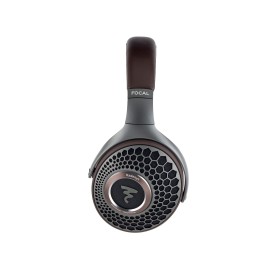
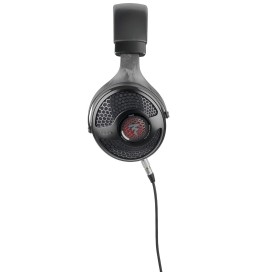
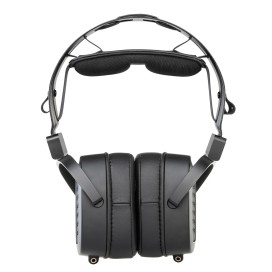
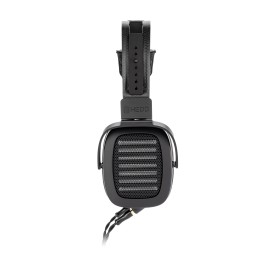
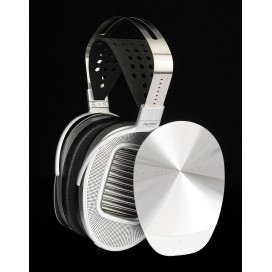
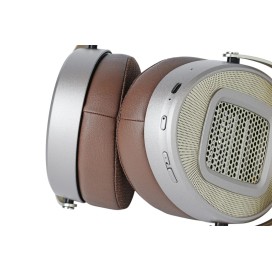
With open-back headphones, the rear of the earcups is not completely enclosed. Instead, air can circulate through grilles, openings or acoustically transparent housing structures. As a result, sound is reflected within the housing less strongly than with closed-back models. This often produces a freer, less confined sound with a greater sense of space, air and naturalness.
The difference is particularly noticeable with acoustic music, jazz, classical music, singer-songwriter recordings, live recordings and complex electronic productions. Open-back headphones can reproduce subtle reverberation, quiet background sounds, layers within a mix and the positions of individual instruments with great precision. This creates a listening experience that is more reminiscent of high-quality loudspeakers than conventional headphone listening.
However, it is also important to remember that open-back headphones provide very little isolation. External sounds can enter easily, and people nearby will also be able to hear your music. They are therefore only suitable to a limited extent for travelling, noisy offices or recording directly next to a microphone. Their strengths clearly lie in focused, uninterrupted listening.
Open-Back Headphones: Sound Characteristics
The main advantages of open-back headphones do not lie in maximum isolation or particularly strong protection from external noise, but in their open sound. Good open-back headphones can reproduce music with great accuracy, fine detail and spaciousness. Discerning listeners particularly appreciate these characteristics because they allow them to immerse themselves deeply in a recording without the sound appearing artificially compressed.
These characteristics make open-back headphones especially appealing to listeners who are interested not only in bass impact or volume, but also in timbre, spatial presentation, resolution and musical subtleties.
Spaciousness, Soundstage and Natural Reproduction
While closed-back headphones often present music in a more direct and compact way, open-back models usually sound wider, more relaxed and more natural. The music feels less attached to the ears and instead unfolds with greater distance and depth.
This is a genuine advantage with well-recorded albums. Voices appear more three-dimensional within the soundstage, cymbals decay more freely, string instruments sound less confined, and live recordings convey more atmosphere. Listeners who value soundstage, depth and air between instruments will often find exactly what they are looking for in open-back headphones.
Transparency and Detail Resolution in Quiet Environments
Open-back headphones perform at their best in a quiet environment. Without distracting external noise, subtle details can be followed particularly clearly: breathing sounds, attacks, reverberation, spatial information and small production choices within the mix. High-quality open-back over-ear headphones in particular can offer an impressive combination of analytical insight and musical flow.
This does not mean that open-back headphones necessarily have to sound cool or analytical. Depending on the model, their tuning may be neutral, warm, dynamic, bright, relaxed or highly direct. The open-back design primarily provides the foundation for a freer sound. The specific sound signature depends on the individual headphones.
Who Are Open-Back Headphones Suitable For?
If you enjoy listening to music at home, use a high-quality headphone amplifier or want to experience your favourite albums with as much space and detail as possible, open-back headphones are often an excellent choice.
Open-back headphones are particularly suitable for:
- audiophile listening at home
- high-quality desktop setups with a DAC and headphone amplifier
- focused listening to albums, live recordings and acoustic music
- mixing, mastering and critical sound assessment
- long listening sessions where an open and airy presentation remains comfortable
- listeners who prioritise soundstage, naturalness and detail resolution over isolation
Open-back headphones are less suitable when you want to block out your surroundings or prevent other people from hearing your music. For commuting, travelling, open-plan offices, libraries and recording situations, closed-back headphones are often the better choice. They provide stronger isolation, keep sound inside the headphones more effectively and often deliver a more direct and physical presentation.
Open-Back Over-Ear Headphones: Comfort, Soundstage and Control
Open-back over-ear headphones are particularly common in the audiophile sector. “Over-ear” means that the earpads surround the ears rather than resting directly on them. This usually distributes pressure more comfortably, gives the ears more space and makes longer listening sessions more comfortable.
This construction is particularly well suited to the sonic ambitions of open-back headphones. The larger earcups provide space for sophisticated driver designs, carefully developed acoustic tuning and a generous spatial presentation. Many high-end headphones therefore use an open-back over-ear design.
Open-back on-ear headphones are also available, but they play a smaller role in the demanding hi-fi and high-end market. They rest directly on the ears and are often more compact, but they can exert more pressure during long listening sessions. Anyone looking for maximum sound quality, comfort and soundstage will usually choose open-back over-ear headphones.
Open-Back Studio Headphones for Mixing, Mastering and Critical Listening
Open-back studio headphones are particularly useful for sound assessment, mixing and mastering. Their spacious and transparent presentation can make it easier to evaluate balance, stereo positioning, depth, reverberation and fine details within a mix. They often provide a more realistic impression of the width and depth of a recording than heavily isolating closed-back models.
For producers, sound engineers and ambitious musicians, open-back studio headphones are therefore an important tool. They do not necessarily replace good studio monitors, but they can serve as a highly valuable second reference in rooms that have not been acoustically optimised.
Open-back headphones are generally less suitable for recording. Because sound escapes outwards, the headphone signal may bleed into the microphone. Closed-back models are normally more practical for vocal recordings, instrument tracking and monitoring in the recording room. During the subsequent mixing process, however, open-back studio headphones can provide exactly the transparency required for precise decisions.
Open-Back or Closed-Back Headphones?
Whether open-back or closed-back headphones are the better choice depends heavily on how they will be used. Open-back headphones are not inherently „better“; they are simply designed and intended for different purposes.
Open-back headphones are recommended when you:
- listen in a quiet environment
- want a large soundstage and natural reproduction
- wish to perceive details, space and timbre consciously
- prefer long listening sessions without a strongly isolated feeling
- listen with a high-quality stationary setup
Closed-back headphones are more suitable when you:
- want to reduce external noise
- do not want to disturb other people
- listen while travelling or in the office
- need to prevent sound leakage during recording
- prefer a more direct and isolated sound
Many discerning listeners ultimately own both types: open-back headphones for focused music enjoyment at home and closed-back headphones for situations in which isolation is more important.
What to Consider When Buying Open-Back Headphones
Open-back headphones differ from one another far more than the general term might suggest. Driver technology, amplifier requirements, comfort and accessories all play an important role.
When purchasing, you should therefore consider more than technical specifications or rankings. The entire signal chain matters: the headphones, DAC, amplifier, musical preferences, listening environment and personal sound preferences all need to work together. Even a highly rated pair of headphones can be disappointing when it does not suit your setup or listening habits.
Drivers, Impedance and Amplifier Matching
Different driver technologies are used in open-back headphones. Dynamic drivers are widely used and can sound highly natural, powerful and musical. Planar magnetic headphones often excel through their fast response, low distortion and controlled bass. Electrostatic systems are known for particularly high resolution and transparency, but require specialised amplifier solutions. You can read more in our blog article “Different driver types: which one is better?”.
Impedance and sensitivity are also important. Some open-back headphones can be driven easily by mobile devices, while others require a powerful headphone amplifier to reach their full potential. High-quality models in particular benefit greatly from clean amplification, sufficient power and a suitable DAC.
To make full use of your headphones’ potential, it is therefore worth considering suitable Amps & DACs, dedicated headphone amplifiers or high-quality digital-to-analogue converters. A well-matched setup can significantly improve control, dynamics, spatial presentation and detail resolution. The “Do they match?” section on our comparison page shows whether an amplifier delivers enough power for your headphones.
Comfort, Weight and Earpads
Sound quality is essential, but comfort determines how often and for how long you will actually use your headphones. Open-back headphones are frequently purchased for extended listening sessions, so weight, clamping force, headband construction, earpads and material quality should not be underestimated.
Earpads affect not only comfort but often also the sound. Their material, shape, distance from the ear and seal can alter the soundstage, bass, presence and treble. Anyone planning to use their headphones for many years should also consider the availability of replacement pads and compatible accessories. You can find suitable accessories for selected models in our Earpads category.
The Best Open-Back Headphones Depend on the Right System
Many users search for the best open-back headphones. This is understandable, but particularly in the audiophile sector, there is rarely one universally correct answer. One model may be outstanding for classical and acoustic music but sound too restrained with electronic music. Another pair of headphones may sound impressively dynamic and immediate but prove too intense for long, relaxed listening sessions.
It therefore makes more sense to search for the best open-back headphones for your individual requirements.
Important questions include:
- Do you listen analytically or primarily for enjoyment?
- Do you prefer a neutral, warm or bright tuning?
- Which genres of music do you listen to most frequently?
- Do you already use a headphone amplifier or DAC?
- Should the headphones be as lightweight and comfortable as possible?
- Is maximum soundstage more important to you than bass impact?
- Are you looking for a studio tool or high-end headphones for pure enjoyment?
Only after answering these questions can you determine which model is genuinely suitable. This is where personal advice is valuable, as technical specifications tell only part of the story. Headphones are always part of a complete system, and every component within that system should work together harmoniously.
Find Excellent Open-Back Headphones at Level Audio
At Level Audio, you will find open-back headphones for discerning listeners who value sound quality, build quality and well-matched system combinations. Our selection is deliberately curated. Rather than simply listing as many models as possible, we aim to offer headphones whose sound and quality we genuinely believe in.
Whether you are looking for open-back studio headphones for precise professional work, open-back over-ear headphones for long evenings of listening or a high-end model for your existing system, we will be happy to assist you with your selection. Our recommendations are not based on generalisations, but on finding the right solution for your preferences, setup and listening environment.
If you would like to compare different models or are unsure which open-back design is right for you, we offer personal advice, by appointment also in our listening room in Bari. This allows you to find not simply any pair of headphones, but the open-back headphones that truly take your music to the next level.
FAQ: Frequently Asked Questions About Our Open-Back Headphones
What Are Open-Back Headphones?
Open-back headphones have acoustically transparent earcups. This allows sound to escape outwards, generally resulting in a particularly spacious and natural presentation.
What Are the Advantages of Open-Back Headphones?
The main advantages of open-back headphones are a large soundstage, high transparency, natural reproduction and excellent detail resolution. In a quiet environment, they can sound particularly authentic and relaxed.
Who Are Open-Back Headphones Suitable For?
Open-back headphones are primarily suitable for music lovers, audiophile listeners and studio users who want to experience highly detailed and spacious sound at home or in another quiet environment.
Are Open-Back Headphones Suitable for Travelling?
Only to a limited extent. Because open-back headphones provide very little isolation, external sounds can enter and music can also be heard by people nearby. Closed-back headphones are usually more practical for travelling, the office or public transport.
What Is the Difference Between Open-Back and Closed-Back Headphones?
Open-back headphones generally sound more spacious, airy and natural. Closed-back headphones provide stronger isolation, keep sound inside more effectively and are better suited to mobile use, recording and noisy environments.
Are Open-Back Over-Ear Headphones Better Than Open-Back On-Ear Headphones?
Not necessarily, but open-back over-ear headphones are generally more popular in the audiophile sector. They often provide greater comfort, allow for larger driver constructions and offer a particularly generous spatial presentation.
Are Open-Back Headphones Suitable for Studio Use?
Yes. Open-back studio headphones are highly suitable for mixing, mastering and critical listening. Closed-back headphones are generally better for recording, however, because they allow less sound to bleed into the microphone.
Do Open-Back Headphones Have Less Bass?
Open-back headphones often sound less forceful than closed-back models, but they can still produce highly precise, deep and controlled bass. Their bass often sounds more natural and less enclosed.
Do Open-Back Headphones Require a Headphone Amplifier?
This depends on the model. Some open-back headphones are easy to drive, while others require a powerful headphone amplifier or DAC to deliver their full dynamics, control and detail resolution.
Which Open-Back Headphones Are the Best?
The best open-back headphones depend on your musical preferences, preferred sound signature, comfort requirements and existing system. Personal advice can help you find the right model for your individual listening style.